
Neuromarketing sits at the intersection of neuroscience, psychology, and marketing. It aims to decode what people cannot fully explain in interviews, focus groups, or surveys. A review in the Journal of Marketing & Social Research argues that traditional tools struggle in a digital world shaped by rapid information flow, algorithmic personalization, attention scarcity, and emotionally charged content. The same review summarizes decades of behavioral research suggesting that over 90% of decision-making is impacted by subconscious processes that consumers are unable to fully express. For brands studying Thai consumers, this framing matters. It encourages research designs that test emotion, attention, and memory directly, rather than relying only on what respondents say.
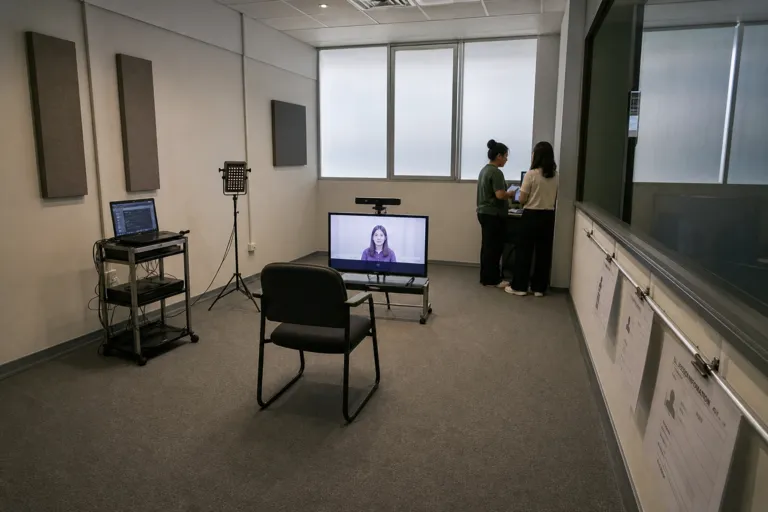
In neuromarketing, facial coding is often used alongside measures like eye tracking, galvanic skin response (GSR), heart rate variability (HRV), and brain-based tools such as fMRI and EEG. Harvard DCE describes consumer neuroscience as observing people’s reactions to stimuli like advertisements, packaging, or a drink, and combining brain measures with physiological tracking such as facial expressions and eye movements. A ScienceDirect paper similarly lists facial coding and eye tracking among the methods used to measure responses and notes that neuromarketing can access emotional reactions that are not readily apparent in standard surveys or interviews. For Thai market tests, facial coding can therefore be positioned as a way to quantify moment-by-moment emotion during exposure to creative, storefront content, and e-commerce experiences.
How Facial Coding Fits Into a Thai Consumer Testing Stack
Facial coding is most useful when it is connected to a broader measurement stack and a clear behavioral question. The ScienceDirect study focuses on online purchase decisions and describes integrating EEG, eye tracking, GSR, and behavioral survey data to examine online stimuli like visual design, website layout, and interactive elements. It reports that visual attention, emotional arousal, and cognitive engagement all have a major impact on digital consumer behavior. For neuromarketing research in Thailand, this means facial coding should not be treated as a standalone “truth machine.” It works best when paired with attention measures, arousal signals, and a simple task design so you can link micro-expressions to what people actually saw and did, not only what they later recall.
Industry claims about performance lifts often cite combined protocols that include facial coding. An Amra and Elma statistics roundup states that a 2026 purchase behavior analysis by the Marketing Science Institute tracked 11,000 consumer purchase journeys across e-commerce and brick-and-mortar retail. It reports that ads refined through iterative neuromarketing testing protocols, including at least three rounds of EEG and facial coding feedback, achieved a 21.4% average lift in declared purchase intent and a 17.8% lift in actual conversion rate. This figure is not Thailand-specific, but it can help Thai teams set hypotheses and define success metrics. The same source also cites an Ipsos and Advertising Research Foundation study tracking 5,100 consumers across the United States, Germany, and Japan, reporting a 29.6% brand recall advantage at 30 days for ads in the top 20% of neural engagement, widening to 33% at 60 days.
Planning ethical, culturally sensitive execution is part of the work, not an afterthought. The Journal of Marketing & Social Research review flags methodological constraints, financial obstacles, ecological validity issues, and ethics concerns tied to privacy, manipulation, transparency, and cultural sensitivity. Wikipedia also notes that neuromarketing research can be limited by high costs because it may require tools such as fMRI, EEG, biometrics, facial coding, and eye tracking. For Thailand-focused studies, the practical takeaway is to scope the toolset to the decision you need to improve. Use facial coding where emotion dynamics are central, and document consent, data handling, and interpretation limits so results remain trustworthy and usable.
What does neuromarketing measure that surveys may miss?
How is facial coding used in consumer neuroscience studies?
How should teams approach neuromarketing research in Thailand with facial coding?
What performance lifts have been reported for ads refined with EEG and facial coding?
What are the main limitations and risks of neuromarketing methods?