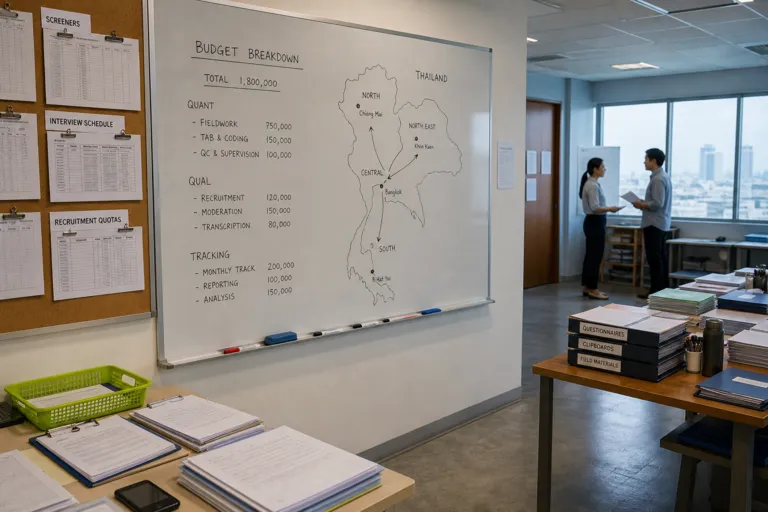
When teams ask about market research cost Thailand, the most useful starting point is not a price list. It is method fit. Iconic Research notes that budget and timeline are secondary; the primary constraint is the question being asked. If your goal is to understand motivations, perceptions, or decision processes, you use qualitative methods. If your goal is to measure awareness, preference, or behavior across a population, you use quantitative methods. In Thailand, the method choice is also constrained by execution realities that global frameworks can miss, including regional coverage, cultural dynamics, platform behavior, and respondent recruitment.
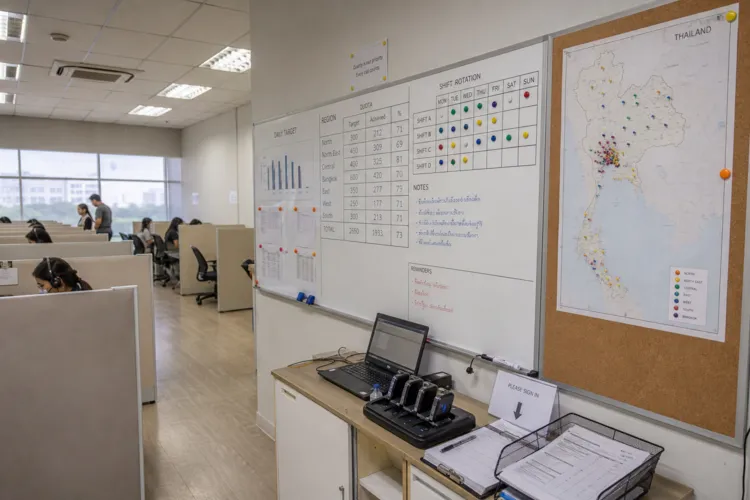
For quantitative work, cost drivers tend to follow the structure of the study and the fieldwork mode. Iconic Thailand describes quantitative research as structured research using surveys and statistical analysis to measure items such as market size, consumer preferences, and purchase intent across large sample sizes. It also lists common approaches: online surveys, telephone surveys, CATI, and CLTs. Their guidance adds that offline surveys can eliminate panel bias, respondent fatigue, and satisficing behavior associated with online research, and that face-to-face and telephone methods can reach representative samples including demographics underrepresented online. They also emphasize verified respondents, trained interviewers, and rigorous quality control, which are practical line items that shape budgets.
How Qual, Tracking, and Channels Change Your Budget Assumptions
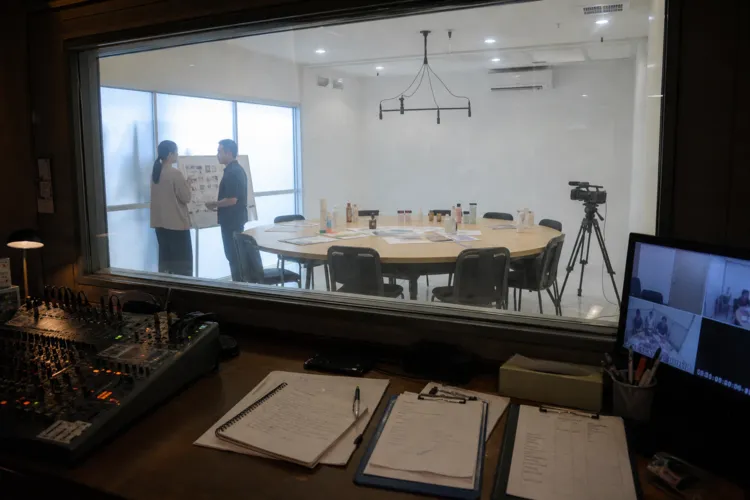
Qualitative budgets in Thailand are often shaped by the need for depth and context. Iconic Research highlights qualitative approaches such as in-depth interviews, focus groups, and ethnography, designed to deliver deep consumer insights and cultural understanding. It also states that face-to-face qualitative methods, particularly in-depth interviews, consistently produce higher data quality in Thailand than self-completion alternatives for complex or sensitive topics. That quality focus can change what you pay for: stronger moderation, better recruitment, and more demanding fieldwork logistics. If you are balancing cost against risk, it helps to treat “cheaper” modes carefully when the topic is sensitive or complex.
Tracking and repeat studies add another layer: channel performance and ongoing access to respondents. Iconic Research notes that LINE is underused but effective for recruited panel studies and post-purchase follow-up research, and that Thai consumers respond to LINE-based research instruments at higher rates than email. This matters because tracking and follow-ups depend on response behavior over time, not just a single wave. If you need nationally representative data for tracking, Iconic Research also states that CAPI and face-to-face surveys can outperform online-only panels. Those choices affect not only fieldwork costs, but also how confident you can be in trend reads across urban and rural areas.
A final budgeting reality is the “quality versus coverage” tradeoff that local providers call out. Standard Insights argues that Thailand is a complex market and often lacks reliable and current information, and that existing market research solutions are either prohibitively expensive or compromise on data quality and coverage. They also emphasize transparency and the ability to recruit respondents from anywhere in Thailand or use your own respondents, then visualize surveys and interviews in customizable reports. For budgeting, this means you should specify up front what “quality” and “coverage” mean for your decision: provincial fieldwork outside Bangkok may require established networks, and analysis needs differ by method, since quantitative work requires statistical processing while qualitative work requires thematic coding and interpretation.
What typically drives market research cost in Thailand more than anything else?
Which quantitative fieldwork modes are commonly used in Thailand studies?
When should a Thailand study lean toward qualitative methods?
What channel considerations matter for tracking research in Thailand?