
Competitive intelligence research Thailand teams can rely on is not spying. It is the ethical and legal practice of gathering, analyzing, and distributing information about your competitive environment, using openly available sources and legitimate research. Done well, it becomes an early warning system for opportunities and threats, while keeping your brand aligned with professional standards and local expectations. In Thailand’s rapidly digitizing market, competitor analysis is described as a systematic evaluation of rival strategies, strengths, weaknesses, and market positioning, combining global frameworks with local consumer insights, social listening, and ASEAN regional dynamics. The key is to study what is visible, compare like with like, and translate signals into decisions rather than gossip.
Start by defining a focused intelligence objective, because a clear question prevents teams from collecting large amounts of information with little strategic value. A structured competitive intelligence process is commonly framed in four stages: define the objective, collect relevant information, analyze the findings, and apply intelligence to strategy. Collection can ethically include competitor websites, public reports, industry publications, social platforms, trade events, interviews, and market studies. Safe competitive intelligence depends on whether information is protected by confidentiality law and whether it is obtained through legal, ethical means. Sources explicitly positioned as off-limits include bribery, blackmail, privacy-violating surveillance, and physical or digital theft.
Ethical Benchmarking Methods That Stay Practical
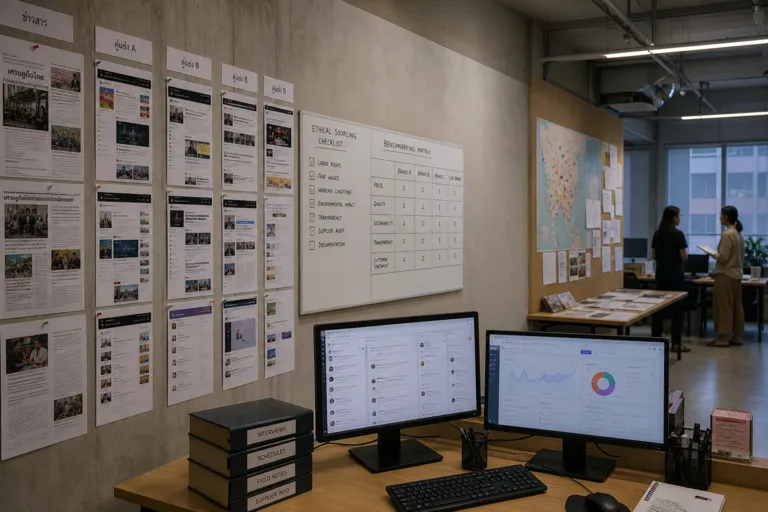
For benchmarking rivals, use repeatable steps and compare operational reality, not rumors. Slideworks recommends a six-step competitor analysis workflow: identify direct and indirect competitors, gather data, analyze marketing and positioning, assess products and services, evaluate customer experience, and synthesize insights into actions. The data can include public filings, product catalogs, digital analytics, and customer feedback, including competitor analysis surveys that capture customer perceptions across brands. For location-based businesses, open location data and POI datasets can give a factual baseline for benchmarking physical footprints, such as place names, addresses, coordinates, operating hours, and store counts. Social listening can also track mentions and sentiment in real time, turning public conversation into actionable inputs for marketing and product teams.
Framework discipline helps keep analysis honest. One source cites a 2024 framework study from Cascade: integrating at least two analytical models, one strategic (such as Porter’s Five Forces) and one operational (such as benchmarking), yields the most actionable insights. This pairing is useful because it forces you to connect “why the market behaves this way” with “what to measure and improve.” To keep the work ethical and brand-safe, apply a simple pre-check: ask whether the information is public, whether the insight serves your audience, whether data collection respects privacy, and whether the action you plan is true to your brand. This checklist approach also reduces “analysis spirals,” where research becomes a substitute for decisions.
Finally, operationalize the program so it can scale across teams. Competitive intelligence can support positioning, product decisions, pricing, expansion, marketing, and long-term planning, but only if insights are distributed and used. Many companies monitor competitors weekly or even daily, with at least a monthly formal analysis, and a common approach is to tier competitors so direct rivals receive the most attention. When you synthesize insights, map them into concrete components that decision makers understand: market overview, competitive positioning, pricing and distribution, customer sentiment, digital footprint, and SWOT outputs. The goal is not to copy, but to spot gaps, vulnerabilities, and strategic opportunities you can pursue with integrity.
What does ethical competitive intelligence mean in practice?
How should teams structure competitive intelligence work end to end?
Which benchmarking steps make competitor analysis repeatable?
How can competitive intelligence research in Thailand stay privacy-respecting?
What framework mix helps produce more actionable competitor insights?