
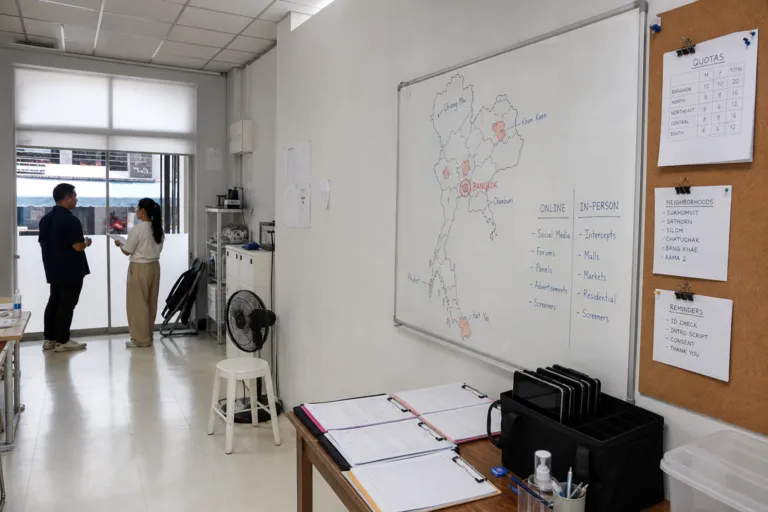
In Thailand, selecting a data collection mode is a validity decision, not a preference. Local guidance emphasizes that execution realities—platform behavior, cultural dynamics, and regional variance—shape which approaches yield reliable data and which do not. The same technique that works in Bangkok can produce unreliable findings in provincial markets, and the same instrument that works for middle-income respondents can fail systematically with lower-income segments. For teams comparing online vs offline fieldwork Thailand projects, the first step is to define the research objective (exploratory, descriptive, or causal) and then match mode to who you must reach and how they will respond.
Online panels can be efficient, but the sources warn about structural coverage limits. In Thailand, online panels—often the default instrument for global agencies—are described as underrepresenting rural populations, older demographics, and lower-income segments, which can create a Bangkok-centric picture that misrepresents national consumer behavior. The risk is highest when regional variation is the business priority and sampling frames default to urban digital panels. Panel-focused guidance recommends safeguards such as feasibility checks before fieldwork, careful screening, and project-specific quotas by region to avoid simply taking whoever the panel supplies most easily.
How to Match Mode to Audience: A Practical Thailand Framework
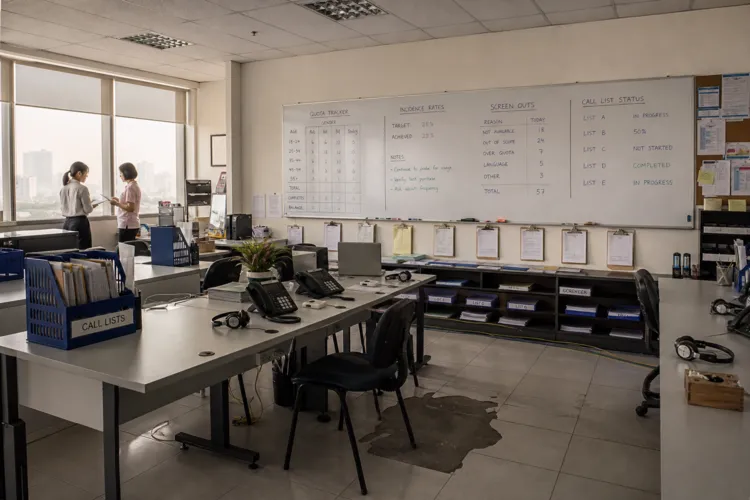
Face-to-face interviewing—often run as CAPI—shows up in the sources as the standard choice for rural data collection, and as a way to improve quality where self-completion survey literacy is variable. In-person interviewers can clarify misunderstood questions and detect disengagement, which matters when you need dependable answers outside major urban centers. An offline demographic survey on cost of living in Thailand is cited as an example of face-to-face fieldwork executed across multiple Thai regions, reaching demographics and geographies that online panels structurally cannot access and producing nationally representative data that reflects the full diversity of Thailand’s population.
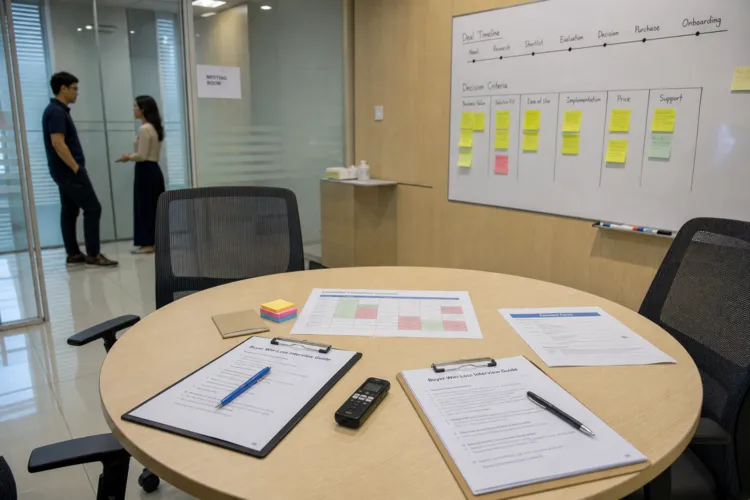
Culture also affects which mode is safer for truthfulness. The sources highlight acquiescence bias, face-saving norms, and kreng jai as patterns that can distort survey responses, including underreporting and overstatement of satisfaction if instruments are not adjusted. For sensitive topics and high-involvement decisions, one-on-one in-depth interviews are described as especially effective because they reduce the social pressure that group settings amplify, producing more candid data. If you do use online modes, best-practice guidance recommends indirect questioning and anonymity to reduce kreng jai-driven underreporting, alongside robust recruitment and fraud controls such as double opt-in and ESOMAR-aligned processes.
Audience-based mode choice often works best as a mixed design. Secondary sources can set context first—Thailand guidance points to institutions such as the Bank of Thailand, NESDC, and ETDA—then primary fieldwork can fill what secondary data cannot reach, especially beyond Bangkok. For broad consumer coverage across provinces, offline-first CAPI with trained interviewers and regional fieldwork teams can reduce undercoverage. For urban, digitally reachable audiences, online panels can be appropriate when you lock quotas, screen carefully, and validate feasibility against incidence and targeting criteria. In practice, the right answer is not “online or offline,” but a mode plan that fits the audience you cannot afford to miss.
How do I choose between online and offline fieldwork in Thailand for different audiences?
Why can Thailand online panel results become Bangkok-centric?
When is face-to-face interviewing (CAPI) recommended in Thailand?
What cultural factors can distort Thailand survey responses, and how can mode help?