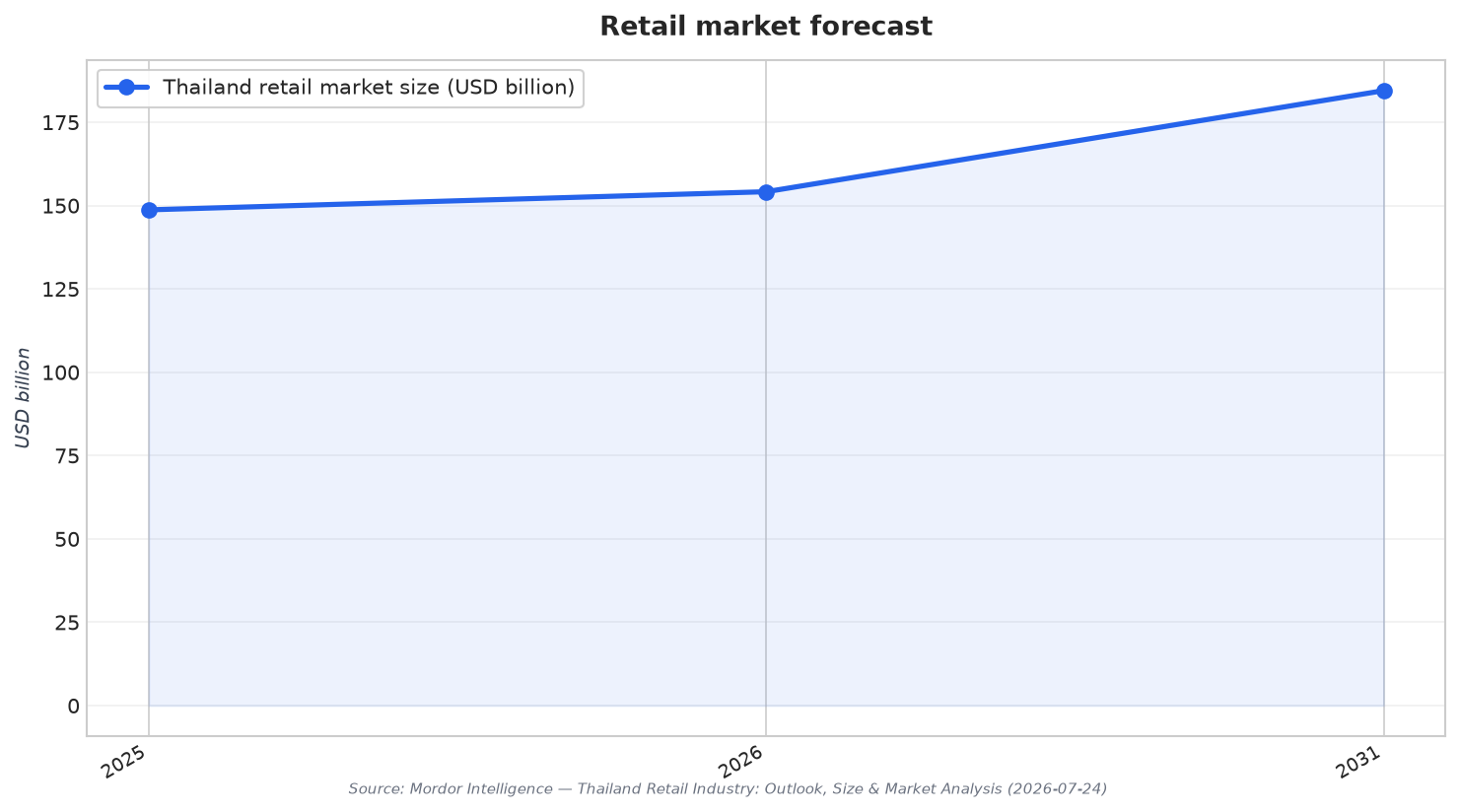
Effective shopper research Thailand teams run today starts by treating the path to purchase as a connected system, not a single channel. Thailand’s retail market is expected to grow from USD 148.73 billion in 2025 to USD 154.17 billion in 2026, and is forecast to reach USD 184.5 billion by 2031, at a 3.66% CAGR over 2026–2031 (Mordor Intelligence). Within that system, food, beverage & tobacco held 55.68% share in 2025 (Mordor Intelligence). Research plans should reflect that everyday essentials still anchor volume, while digital touchpoints increasingly shape consideration, conversion, and repeat.
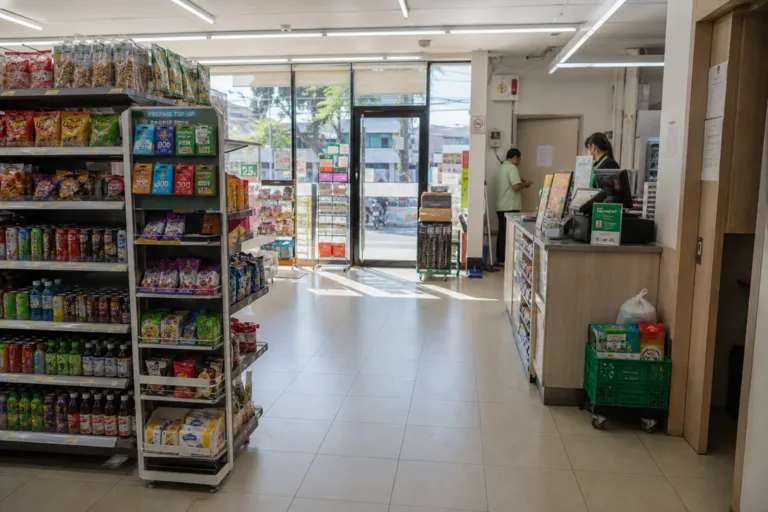
Start mapping from “need state” to “basket,” because the offline base remains material even as online expands. Traditional mom-and-pop outlets accounted for 44.10% of Thailand retail market share in 2025 (Mordor Intelligence), and convenience stores held 38.78% (Mordor Intelligence). The same source forecasts convenience stores at a 10.15% CAGR from 2026 to 2031, while “e-commerce & others” expand at 16.85% CAGR over 2026–2031. A practical implication for researchers is to sample both fast, small-basket missions and planned replenishment, then track how digital exposure changes store choice, bundle building, and brand switching.
How Digital Payments and Social Platforms Reshape Decision Moments
Payments and platforms change where “friction” appears in the journey, so they should be measured as behavior drivers, not background context. PromptPay usage is reported at more than 52.7 million accounts (Mordor Intelligence). Separately, Thailand’s central bank is cited as noting about 71 million daily real-time payment transactions as of March 2025 (IconicThai). These signals support omnichannel designs where “see it, pay instantly, receive fast” becomes the expectation. In parallel, social commerce is described as defining online behavior, with about 91% of Thai online shoppers having purchased via social platforms (IconicThai). Research programs should therefore capture platform discovery, trust cues, and payment choice alongside product attributes.
Live commerce and rapid delivery also compress the time between inspiration and checkout. Mordor Intelligence describes consumers embracing 30-minute delivery promises and notes retailers testing “shop-in-app” livestreams that blend impulse discovery with rapid fulfillment. For market sizing context, IMARC reports Thailand’s e-commerce market at USD 136.0 billion in 2025, projecting USD 1,201.2 billion by 2034 at a 26.57% CAGR. Meanwhile, IconicThai cites Thailand e-commerce at about THB 1.1 trillion in 2024, projected to about THB 1.6 trillion by 2027 (about 11% CAGR). Because sources use different currencies and methods, shopper research should focus on comparable KPIs: livestream view-to-cart rates, purchase triggers, and fulfillment satisfaction across Bangkok and second-tier cities.
Finally, the journey is influenced by where demand concentrates and how categories move across channels. Technavio values Thailand’s grocery segment at USD 95.76 billion in 2024 and states the offline segment accounted for the largest retail market revenue share in 2024. Mordor Intelligence adds that personal care & household care is projected to grow at an 11.15% CAGR from 2026 to 2031. MarkWide Research highlights behavioral shifts where traditional department store channels lose apparel and electronics volume to direct-to-consumer platforms, and notes this is visible in Chonburi and Pathum Thani. In practice, the best path-to-purchase maps in Thailand separate high-frequency convenience missions from higher-consideration online journeys, then connect them with consistent identity, promotion, and post-purchase feedback loops.
What does shopper research in Thailand need to capture today?
How important are convenience stores in Thailand’s purchase journey?
What signals show social commerce affects buying behavior in Thailand?
Which parts of Thailand retail are forecast to grow faster online?