
In Thailand, the case for using AI in research is getting stronger because the country is building both policy direction and infrastructure for real deployment. Thailand’s National AI Strategy (2022–2027) targets 30,000 trained AI professionals, 100 R&D prototypes, and business and social impact of at least 48 billion baht from AI technology. Market conditions are also expanding: DEPA’s Thailand Digital Technology Foresight 2035 report puts the total AI market at 114 billion baht by 2030. For insight teams, this backdrop matters because it shapes what tools can run locally, what data can be handled responsibly, and how quickly new Thai-language models can move from experimentation into everyday research workflows.
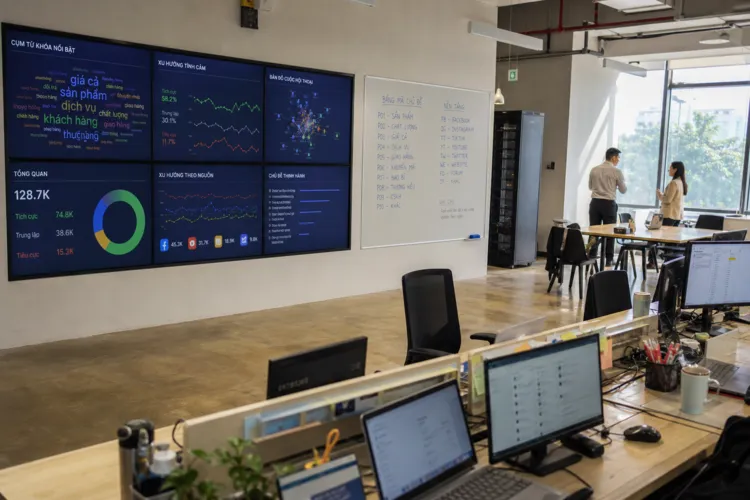
GenAI’s biggest win in research is speed across messy, multi-source data. One industry view is that generative AI can automate data collection, analysis, and interpretation, and rapidly analyze datasets from surveys, social media, and online reviews to spot trends and consumer preferences. A survey cited in this context found that 76% of market researchers believe GenAI tools will enhance their organizations’ competitive advantage. In practice, this aligns with common NLP use in research, where open-ended comments can be grouped into themes such as taste, packaging, price, and health benefits. In Thai-language work, these same techniques can help teams move faster from raw text to structured themes, while keeping researchers focused on what the outputs mean for strategy.
Where GenAI Helps Thai-Language Insight Work Most
Thailand’s AI trajectory emphasizes local-language fit alongside deployment capacity, which supports research use cases that depend on Thai text and multimodal inputs. One country briefing describes Thailand’s most visible AI asset as a locally tuned language-and-multimodal stack rather than a generic imported experience. Meanwhile, cloud and compute foundations are strengthening. AWS opened its first infrastructure region in Thailand in early 2025, and a data-center-focused market report states the Thailand AI data center market is worth USD 0.51 billion in 2026 and is growing at a CAGR of 24.07% to reach USD 1.49 billion by 2031. The same report notes the government has set aside THB 25 billion for national GPU clouds intended for sensitive workloads such as citizen registries and Thai-language LLM training.
These enablers can shorten the cycle from question to answer, but they do not remove the need for controls. Research-focused guidance warns that risks include biased outputs, inaccurate summaries, data privacy concerns, and the possibility that AI-generated responses could distort survey data if not properly controlled. Another Thailand-specific lens flags practical execution barriers that can stall plans: budgets, talent, data quality, and clear ownership. For teams applying AI in market research Thailand, the gap to manage is not just model capability; it is the full workflow, including governance, sourcing, and validation steps that keep Thai-language summaries faithful to what respondents actually said.
So where does GenAI still fall short for insight work? It struggles most when the research problem depends on trust, provenance, and strict handling of sensitive data. Even as Thailand builds governance tooling—such as executive guidance, GenAI guidance, and readiness assessment—the day-to-day reality is that models can still produce confident but wrong summaries, or amplify bias that already exists in the inputs. That is why many organizations treat GenAI as an accelerator rather than a decision-maker: it can draft reports, surface themes, and propose follow-up questions, but final interpretation should stay with researchers who can check source material, challenge assumptions, and decide what evidence is strong enough to act on.
How is AI used in market research in Thailand today?
What numbers show Thailand is investing in AI foundations that can support research work?
Where does GenAI most improve Thai-language insight workflows?
What are the biggest research risks when using generative AI?