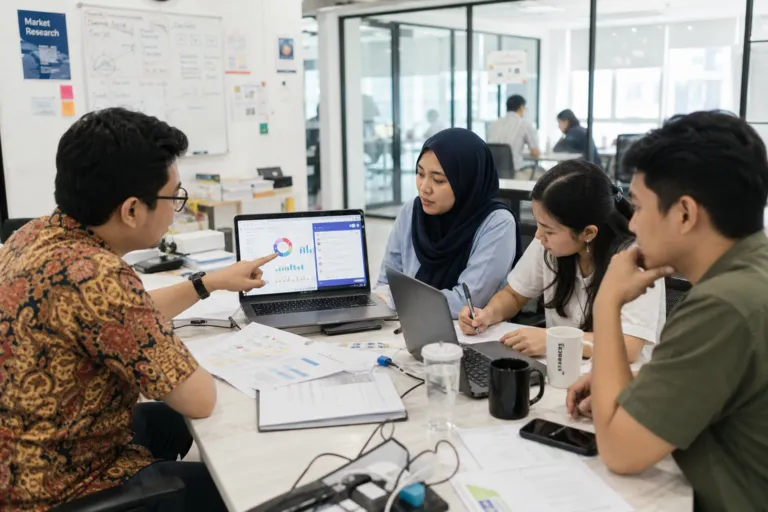
Generative AI is transforming market research in 2026 from end to end, spanning study design, data collection, analysis, and reporting. Sources describe a shift away from using AI only for efficiency, toward using it as a lens for understanding how consumers discover, evaluate, and trust brands. In practice, tools can act more like analysts, synthesizing large volumes of raw inputs such as survey responses, social posts, and product reviews into outputs teams can work with. The risk is also clearer: because AI makes output easy to generate, it can encourage teams to publish conclusions before they are properly checked. Speed helps only when it stays grounded in what people actually said and what the numbers show.
One of the most practical workflow changes is how research teams handle open-ended survey questions. A structured approach described in the sources is to use AI to generate a first-pass codeframe, refine codebook definitions with human review, then code responses at scale and quantify themes by incidence and segment. Teams increasingly expect open-ended coding to support quantitative reporting, so outputs should include theme frequency, segment cuts, and, when useful, sentiment distribution across codes. The point is not just faster text generation. It is producing analysis-ready material that supports theme development and quote extraction without hours of manual cleanup, while keeping an evidence chain intact.
AI-Driven Discovery Changes What Market Research Must Measure
Market research also has a new measurement problem: AI assistants are becoming entry and exit points for information. Sources note that consumers increasingly ask systems like ChatGPT, Gemini, and Perplexity questions such as “What’s the best brand for…?” and receive direct answers synthesized from across the web, rather than scanning search results. This is where Answer Engine Optimization (AEO) and Generative Engine Optimization (GEO) show up as research inputs, not just marketing tactics. AEO focuses on making content become “the answer” in AI-generated responses. GEO extends that focus to ensuring a brand is accurately represented across generative AI systems. For researchers, the new layer is tracking not only what consumers want to know, but how AI interprets and presents the brand.
For teams thinking about GenAI in market research across Southeast Asia, the infrastructure and platform context matters, but sources are broader than Southeast Asia alone. They describe Asia Pacific as a region with a significant population and large consumer base, creating demand for AI-powered products and services, and they cite investments in AI research and infrastructure in countries such as China, Japan, India, and South Korea. One specific Southeast Asia signal in the sources is cloud investment: Oracle invested over USD 6.5 billion in October 2024 to establish a public cloud region in Malaysia, with the expansion positioned as supporting AI innovation and digital transformation. This matters for research operations because cloud infrastructure can affect how efficiently organizations deploy generative AI applications and scale workflows.
On the technology side, the sources describe market-level adoption patterns that can inform how research leaders plan tooling. Grand View Research reports that the software segment held 64.1% revenue share in 2025, and that transformers dominated with a 40.9% share in 2025. The same source ties adoption to advances in natural language processing, contextual reasoning, and multimodal capabilities, and notes organizations use virtual assistants and AI copilots to reduce operational costs, optimize workforce utilization, and streamline enterprise processes. For market research teams, the practical takeaway is to design workflows where AI drafts and structures work, while humans validate logic, definitions, and claims—especially when insights will drive decisions in fast-moving markets.
How is generative AI changing market research workflows in 2026?
What is a reliable way to use AI on open-ended survey responses?
Why do AEO and GEO matter for modern market research?
What source-backed signal connects Southeast Asia to GenAI deployment capacity?
What should teams keep in mind when applying GenAI in market research Southeast Asia?