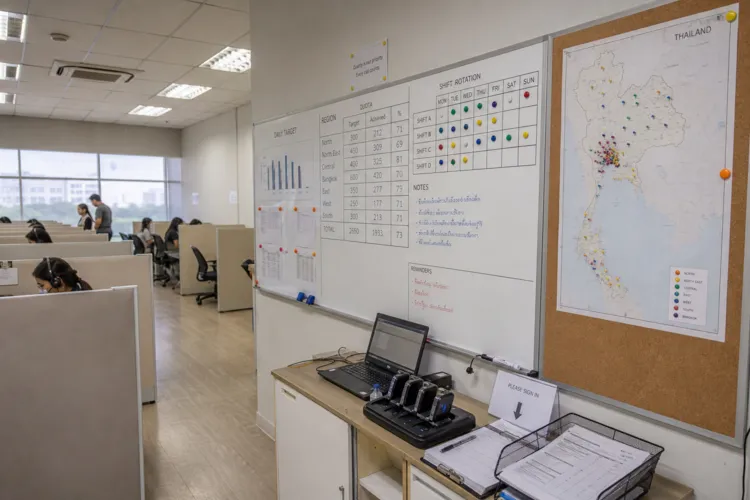
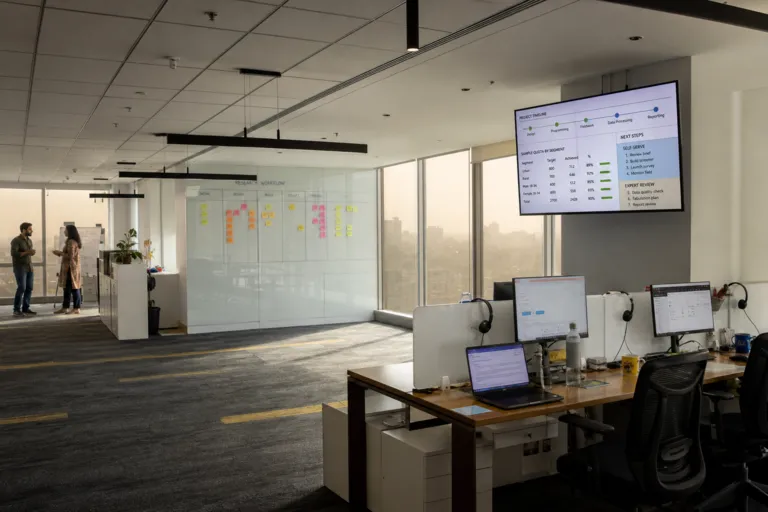
DIY vs full-service market research is no longer a simple binary choice. A 2026 comparison guide based on 500+ market research projects across Southeast Asia says the decision usually comes down to three factors: timeline, budget, and research complexity. It also describes a spectrum of approaches, ranging from pure self-service studies to managed platform services to traditional agency research. This matters because each model changes what you do in-house versus what you outsource, and it changes how quickly you can get from a question to a usable decision.
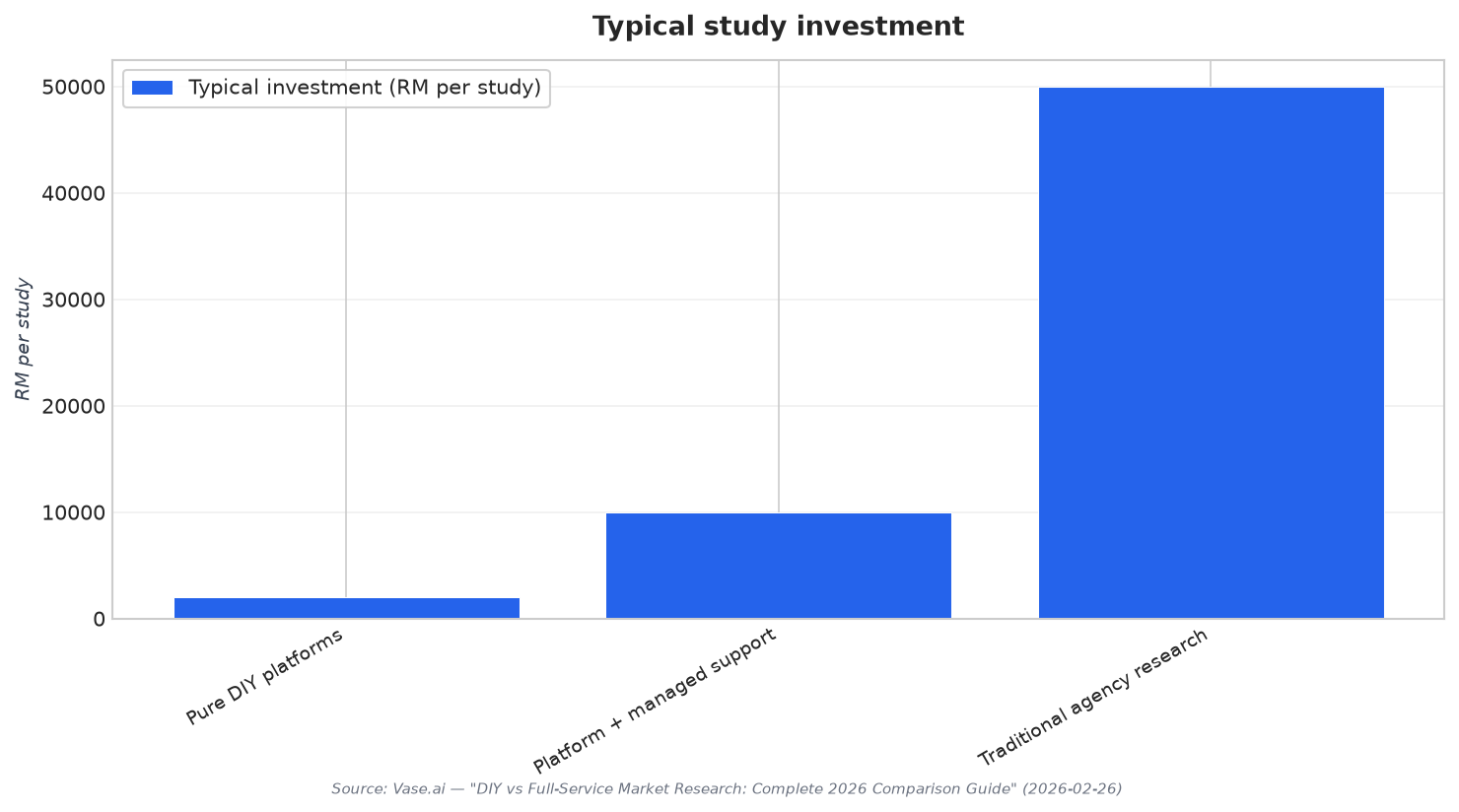
Pure DIY platforms are positioned for speed and cost control, but they shift the burden of execution onto your team. In Southeast Asia pricing benchmarks, a typical investment is RM 2,000–8,000 per study, with a typical timeline of 2–7 days and sample sizes that vary from 100–600+ respondents. These platforms usually include a survey builder and hosting, panel access to a general population, real-time data collection, raw data export (Excel, CSV, SPSS), basic filtering and cross-tabulations, and dashboard access. What they often do not include is questionnaire review, deeper quality assurance, analysis, interpretation, or strategic recommendations.
Where DIY Breaks Down: Sampling, Questions, and Quality Control
DIY can work well for short, simple surveys, especially when you need a quick read and the underlying sample is sound. Dynata highlights examples such as testing ad creatives, gauging sentiment on current news events, or getting reactions to a new product or idea. But multiple sources warn that the “simple” parts are where many DIY efforts get risky. Dynata frames market research as asking the right people the right questions and understanding their answers, and emphasizes sampling and question design as core skills. Another issue is data quality: the Southeast Asia guide notes that many basic DIY tools do not check for problems like speeders, straight-liners, or bot responses, and suggests choosing platforms that offer AI-powered cleaning and quality guarantees.
If you want speed but need help avoiding common pitfalls, a managed platform model sits between DIY and a traditional agency. The Southeast Asia pricing benchmarks describe “platform + managed support” as RM 10,000–40,000 per study, typically delivered in about 5 days to 2 weeks. It also cites 300–600+ respondents as an industry standard for reliability in this model. Unlike pure self-service, this approach includes expert questionnaire review and optimization, sample design and quota configuration, translation support, real-time quality monitoring, and human-assisted AI data cleaning to remove low-quality responses. In practice, it can be a fit when you need better rigor but still value platform efficiency.
Full-service research shifts the whole lifecycle to a provider, from early consultation through reporting and insights delivery. TGM Research describes full-service as managing stages like consultation to refine what to measure and why, methodology and questionnaire design, and reporting that turns results into actionable recommendations supported by charts and visuals. Oreate AI adds that full-service firms bring dedicated resources and experience across research design, sampling techniques, analysis, and reporting, and suggests that what takes a professional a week could stretch into a month for someone balancing research with other responsibilities. In Southeast Asia price benchmarks, traditional agency research is framed at RM 50,000–150,000+ per study, which can be a fit when complexity is high or you need decision-ready deliverables.
What factors should I use to choose between DIY and full-service research?
What do pure DIY platforms typically cost and how fast are they?
When are DIY market research tools a good fit?
What does a managed platform model add compared with pure DIY?
What types of work does full-service market research cover?