
Online panels make it possible to run studies quickly across Indonesia’s large and connected population. One provider describes access to 3.2M+ verified respondents from its online research panel in Indonesia, while country context from the CIA World Factbook includes an internet penetration rate of 69.0% (2023) and an internet population of 194,278,101. Scale is helpful, but it also raises exposure to low-quality traffic. Across the industry, estimates suggest 15–30% of market research data contains fraudulent responses, which can lead to wasted incentives, flawed decisions, and expensive re-fielding. For teams working on tracking or longitudinal work, bad data in the first wave can skew every comparison that follows.
Fraud shows up in multiple forms, so prevention must start before fieldwork ends. Common patterns include bots, professional survey takers who game screeners, duplicate respondents completing multiple times under different identities, and offshore panels using VPNs to appear local. EMI Research also describes distinct “fraud personas,” including a “Chameleon” who shifts demographic and behavioral claims across panels to qualify, and a “Notorious VPN” who cycles IP addresses, VPNs, anonymizers, and privacy controls to suppress signals that quality systems rely on. These behaviors can look normal in a single survey but become obvious when you compare identities and patterns across time.
A Layered Fraud-Detection Playbook for Indonesian Online Panels
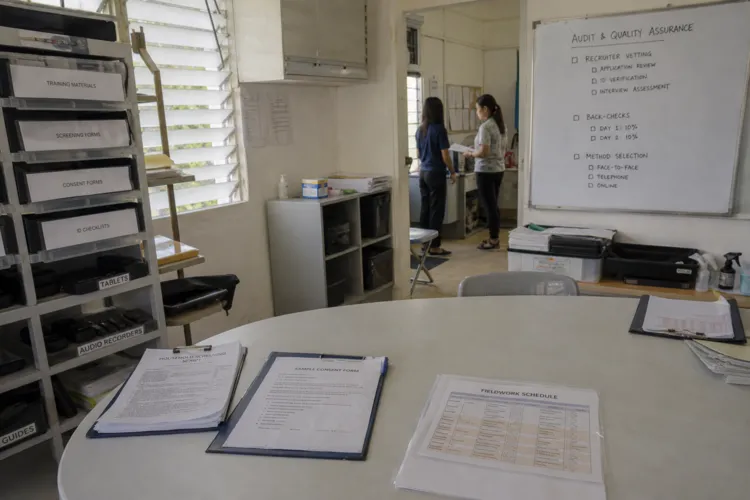
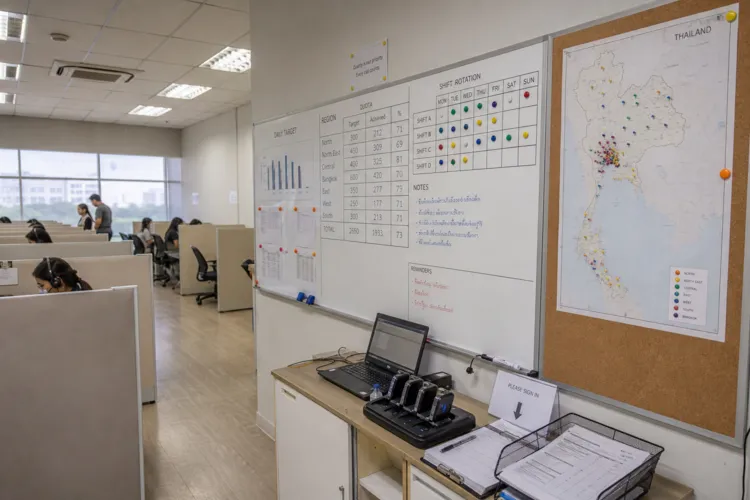
One check is not enough because fraud tactics keep changing. A practical approach is layered: verify identity at registration, validate signals at survey entry, and monitor metadata during fielding. Panel management software can centralize respondent profiles, survey activity, rewards, reporting, and quality checks, making it easier to spot duplicates and suspicious profiles earlier. Basic safeguards include email verification, mobile verification, device review, location checks, and duplicate detection during registration and survey entry. Location mismatches can be flagged by comparing stated country with time zone, IP location, and device language. If diurnal activity differs from what you expect, it can indicate respondents answering from a different time zone, while flat activity may suggest bots because machines don’t sleep.
Plan for VPN behavior rather than assuming you can block it perfectly. SurveyEngine notes that VPN detection depends on the lookup service’s accuracy and coverage, with up to 80% detected, while short-lived, private VPNs used for one-off scams can be nearly impossible to catch. That is why source-level monitoring matters. Track where respondents come from and compare source quality by signup rate, completion rate, duplicate rate, and rejection rate. SurveyEngine provides a concrete example of why segmentation works: in a health preference study targeting NM-CRPC patients, an incidence rate rose from 8% to 34% over three days, and metadata analysis revealed 71% of the high-incidence completions came from the same panel sub-network.
AI can help teams scale detection, but it should support, not replace, good operational controls. TGM Research explains that AI detects anomalies, adapts to new tactics, and can clean data in real time, while also using NLP to interpret open-ended responses at scale. Purpose-built tools add more layers. CloudResearch’s Sentry combines real-time behavioral analysis, on-screen event recording, and AI-assisted scoring, and describes a system that evaluates respondents using behavioral analysis, event tracking, AI and translation detection, geo-location tracking, and advanced fingerprinting. In testing against competitors, Sentry reports it usually reduces bad open ends by >50%. Providers operating in Indonesia also describe quality-control programs designed to detect and eliminate survey fraud, bots, and ghost completes, with stated adherence to ESOMAR and JMRA quality standards—useful signals when selecting sample sources for studies where survey respondent fraud in Indonesia is a key risk.
How serious is survey respondent fraud in Indonesia-focused online panel research?
What are common fraud patterns researchers should watch for in online panels?
What are the most practical early checks to prevent low-quality completes?
Can VPN detection fully solve panel fraud?
How can AI improve fraud detection without relying only on manual review?