Service expectations in Singapore can be unforgiving because the difference between a “good” interaction and a “five-star” interaction is often made up of small details. A mystery shopping programme makes those details visible in a way that internal audits and customer surveys often cannot. It uses carefully selected evaluators who pose as regular customers and measure the real experience against defined criteria. The point is simple: it captures what people encounter when nobody thinks they are being watched, and it turns that experience into evidence leaders can use to improve service, operations, compliance, and customer experience.
Recent hospitality findings illustrate why this matters in a high-expectation market. Assembled reports completing 28 mystery shopping visits across several five-star luxury hotels in Singapore, where room rates started at $450 per night. In that work, the gap between brand promises and delivered experience was widest at two touchpoints: check-in and the hotel restaurant. Check-in was rated the weakest service moment in 19 of 28 visits, or about 68%. The pattern was not dramatic rudeness, but small misses that accumulated into a less “personalised” feel than the brands promised.
How Benchmarking Works: Comparable Scenarios, Scores, and the “Why”
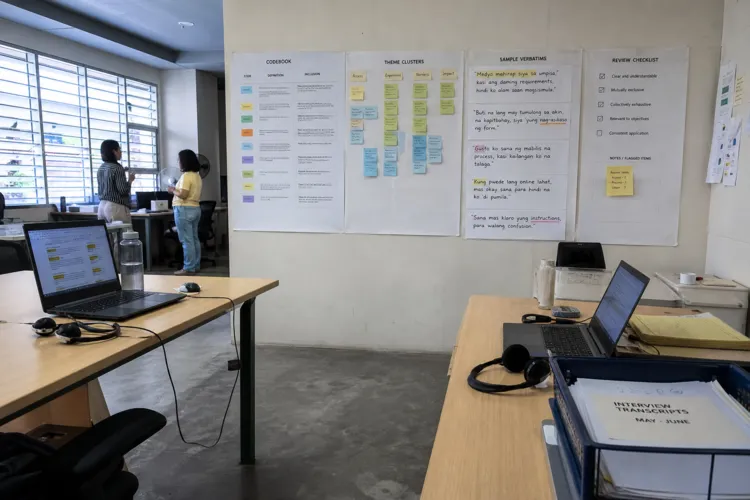
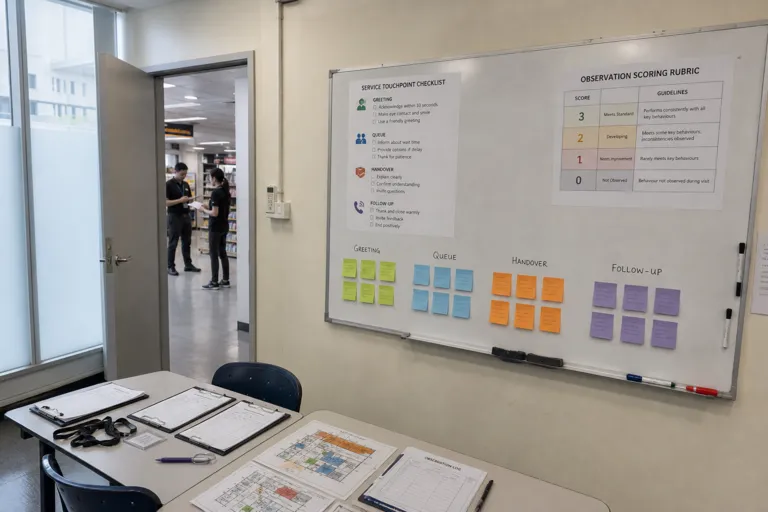
Benchmarking is where mystery shopping earns its keep. Evaluators follow pre-defined scenarios and record observations against structured criteria, so results can be compared by location, region, daypart, channel, and behavior. The data can cover service quality, brand standard execution, compliance, product availability, speed, accuracy, and the qualitative details that explain why an interaction felt smooth or frustrating. This is also why narrative matters alongside scoring: numbers can show a step slipped, while written notes reveal what it would take to fix. Many programmes operate as a cycle: measure, coach, and re-measure, where a single wave is treated as a baseline, not a verdict.
Singapore’s operating context adds pressure to consistency. Assembled cites Singapore Tourism Board (STB) tourism statistics showing Singapore received over 16.9 million international visitors in 2025, with hotel occupancy averaging 81.9%. At those occupancy levels, consistency becomes harder to maintain, and gaps become easier for guests to notice. In parallel, STB’s Hotel Industry Transformation Map 2025 emphasises technology adoption and workforce development as pillars for the sector’s next phase. In practice, a well-designed mystery shopping effort gives teams a way to check whether those investments translate into better delivery at the moment of truth.
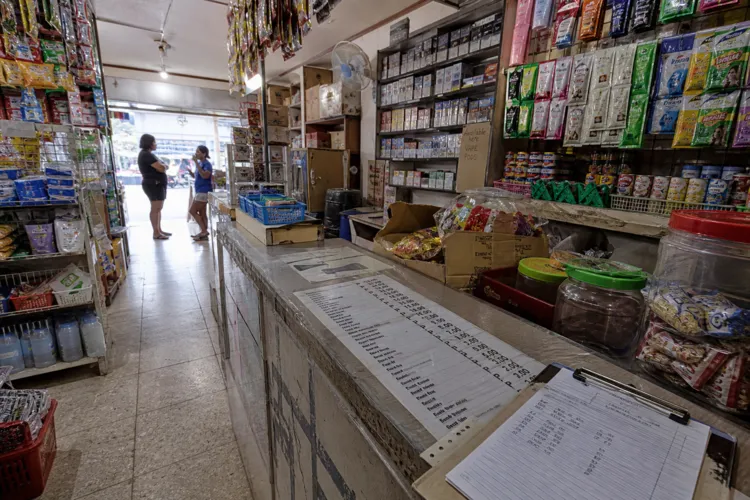
A strong programme also respects research standards and avoids overclaiming from thin samples. SI Labs notes that ISO 20252 contains requirements for mystery shopping, including provisions for tester training, quality control, and ethical conduct, and that analysis is conducted anonymously at the location level, not the individual level. It also cites Finn and Kayande (1999), who found standard practice of two to four visits per location is insufficient to produce statistically representative results, recommending larger samples for robust benchmarks. In Singapore, Assembled’s market research guide describes the method’s use by retail chains, automotive showrooms, F&B groups, financial services branches, and healthcare providers operating across multiple outlets, where comparable evidence across sites is the practical goal.
What does a mystery shopping programme measure in practice?
What did the Singapore luxury hotel mystery shopping visits reveal?
Why does consistency get harder at high occupancy?
How should companies avoid over-interpreting mystery shopping results?
How can mystery shopping in Singapore support benchmarking across outlets?