Building a reliable consumer panel Indonesia brands and researchers can trust starts with local reality, not a one-size-fits-all template. Indonesia is described as the fourth most populous country, with over 300 ethnic groups and 700 languages, which creates both opportunity and risk for research design. This diversity means questions, recruitment, and fieldwork procedures must be adapted to how consumers actually live and communicate. Even the economic context matters for framing studies: one source notes Indonesia ranked as the 16th largest economy globally with nominal GDP of approximately USD 1.371 trillion in 2023, and projected growth of 5.2% by 2025 driven by domestic demand and government initiatives.
A dependable panel program begins with a precise research question and a sampling strategy that mirrors the population you want to represent. A methodology guide emphasizes that sample size should come from acceptable margin of error and confidence level, not budget. For nationally representative work, it calls stratified random sampling based on urban population proportions by region as the minimum standard. For narrower targets, it recommends purposive sampling with defined quotas by demographic and behavioral characteristics. Another warning is especially relevant for panel work: convenience samples from accessible panels can fail the “documented statistical rationale” needed for reliable quantitative conclusions.
How to Prevent Panel Bias and Protect Data Integrity
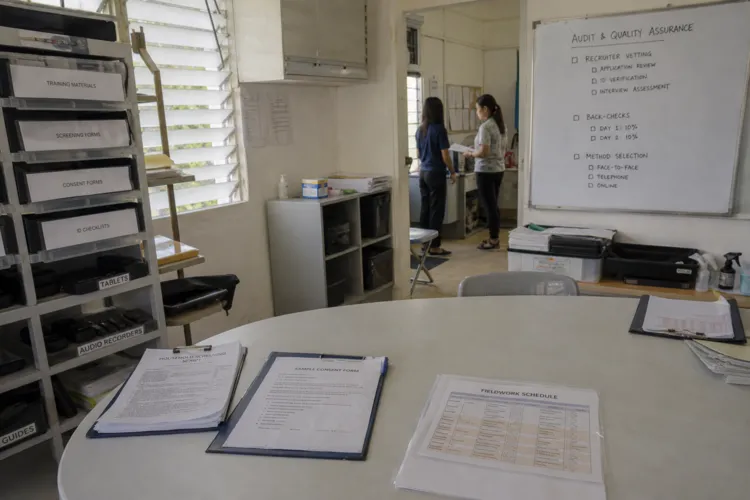
Panel reliability can collapse when recruitment defaults to urban online audiences. An Indonesia-focused research note cautions that designs built on urban online panels can produce findings that represent approximately 30% of the actual consumer base, and it highlights the need for explicit geographic stratification (Java, Sumatra, and other islands at minimum). This is not just a sampling detail; it changes what “Indonesia” means in your dataset. In parallel, survey execution needs layered quality control. Recommended baselines include CAPI with GPS timestamp on every interview, supervisory back-checks on a minimum 15–20% of respondents, and audio recording verification, plus automated checks for straight-lining, speeders, and logical inconsistencies before analysis.
Instrument quality is another make-or-break factor for panels, because poor questions amplify bias even when the sample is strong. The survey guide describes a psychometrically valid instrument as one with non-leading questions, consistent scales, and question ordering that avoids bias. It also states that cognitive pretesting with 30–50 respondents from the target segment before full fieldwork is standard practice, because items that appear clear to the research team can fail with actual respondents. When you operate an ongoing panel, repeating this discipline helps maintain trend integrity as categories, language, and consumer familiarity evolve.
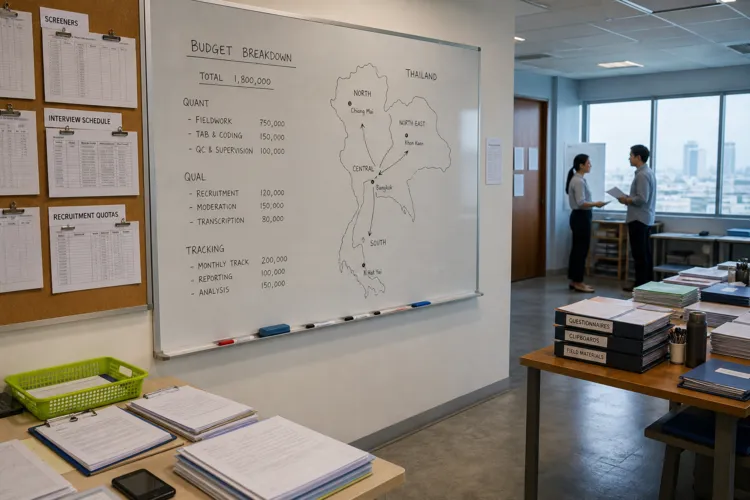
Finally, strong panel programs in Indonesia should treat qualitative work as a design input, not an optional add-on. One Indonesia consumer research source recommends a sequential mixed-methods approach: qualitative exploration to generate hypotheses and develop accurate survey language, followed by quantitative confirmation to measure prevalence at scale. It also specifies common qualitative formats, including in-depth interviews lasting 45–90 minutes and focus group discussions with 6–8 respondents in a moderated 90–120 minute session. This combination helps ensure your panel measures what matters, and that results inform decisions rather than merely producing data.
What makes a consumer panel in Indonesia reliable for decision-making?
Why can urban online panels misrepresent Indonesia?
What quality controls are recommended during data collection?
How should questionnaires be validated before fieldwork in Indonesia?
How do you design a consumer panel Indonesia teams can use for both depth and measurement?