Deep Cultural Understanding
We help you connect with ASEAN's diverse cultures by navigating local habits, values, and unspoken norms. This ensures your strategy aligns with local expectations, building trust and fostering sustainable results.


With decades of experience, we excel in agriculture consulting in ASEAN, helping clients thrive in ASEAN's competitive agriculture sector. Our wide range of services and hands-on support foster growth, leveraging our global reach to navigate local challenges effectively.
ASEAN’s agriculture, forestry, and fishing sector contributed approximately 9.6 percent of the region’s total GDP of about US $3.8 trillion in 2023, and supported the livelihoods of around 93 million people across member states. The region’s main crops exhibited relative stability from 2015 to 2024: paddy production exceeded 190 million metric tons annually, reaching around 200.5 million tons in 2024, while maize output rose gradually to about 43.7 million tons.
Agricultural share of GDP varies across major economies: in 2025, agriculture accounted for roughly 13.1 percent of GDP in Indonesia, 8.6 percent in the Philippines, and 8.8 percent in Thailand. That year, annual GDP growth rates reached around 5.1 percent in Indonesia, 4.4 percent in the Philippines, and 2.4 percent in Thailand.
Growth in the Philippines’ agriculture, forestry, and fishing sector rebounded in 2025, recording a full-year expansion of 3.1 percent, after a decline of 1.5 percent in 2024; the sector accounted for about 7.9 percent of the country’s GDP.
ASEAN's agriculture, forestry, and fishing sector contributed
Source: ASEAN Secretariat
The ASEAN agriculture landscape is diverse, encompassing sectors like aquaculture, livestock, crop production, forestry, horticulture, agroforestry, biofuels, organic farming, supply chain management, precision agriculture, export marketing, agrotechnology, policy compliance, financial services, and land management. These industries are key to the region's economic stability and growth, requiring expert guidance to navigate complex challenges and opportunities.
Current trends in the ASEAN agriculture sector include the adoption of smart technologies, sustainable practices, increased productivity, and climate resilience. Our company's agriculture consulting leverages these trends to provide transformative solutions tailored to the market's specific demands, helping enterprises thrive in a competitive environment.
Through our expert agriculture consulting services, we offer comprehensive insights and strategic planning, empowering businesses to optimize operations and achieve sustainable growth. Our commitment to innovation and excellence ensures that clients stay ahead in the rapidly evolving ASEAN agricultural sector.
We help you connect with ASEAN's diverse cultures by navigating local habits, values, and unspoken norms. This ensures your strategy aligns with local expectations, building trust and fostering sustainable results.
Our actionable intelligence, powered by real-time market monitoring and insights from your ecosystem, enables you to make informed decisions, seize emerging opportunities, and mitigate risks in ASEAN's dynamic markets.
Through direct engagement with key stakeholders, we provide you with nuanced perspectives that reveal the “why” behind market behaviors, helping you design tailored solutions that drive meaningful results.
Validate opportunities, manage risk, and allocate capital with greater confidence through current market evidence and practical strategic advice.
Our company has successfully supported various Agriculture projects by providing market research, competitive analysis, and strategic guidance to help businesses succeed.
We offers comprehensive Agriculture market research, delivering valuable insights and actionable recommendations in ASEAN to enable businesses to make well-informed decisions and achieve long-term success in the industry.
We offers comprehensive Agriculture Strategic Planning services in ASEAN, providing tailored frameworks and actionable strategies to help businesses achieve their goals and sustain growth in a competitive environment.
We delivers expert Agriculture Market Entry Strategy solutions in ASEAN, offering valuable insights and effective approaches that empower businesses to successfully penetrate new markets and secure a competitive edge.
We provides in-depth Agriculture Merger and Acquisitions advisory in ASEAN, guiding businesses with expert recommendations to navigate complex transactions, unlock synergies, and maximize shareholder value.
We specializes in Agriculture Value Chain Analysis in ASEAN, delivering actionable insights that optimize operational efficiency, enhance profitability, and drive strategic decision-making for businesses across industries.
We offers thorough Agriculture Competitive Benchmarking services in ASEAN, helping businesses identify key performance gaps, uncover market opportunities, and build stronger competitive strategies.
We delivers expert Agriculture Distribution and Strategic Partnership solutions in ASEAN, enabling businesses to establish effective networks, foster collaborative relationships, and achieve long-term market success.
We provides advanced Agriculture Consumer Behavior Analysis services in ASEAN, offering actionable insights into consumer preferences and trends to help businesses refine their strategies and enhance customer satisfaction.
Establish industry dominance with our experts and partners











South China Morning Post featured Damien Duhamel, Managing Partner at Eurogroup Consulting, sharing his perspective on how Chinese EV competition could reshape Malaysia's automotive industry and the wider regional market.
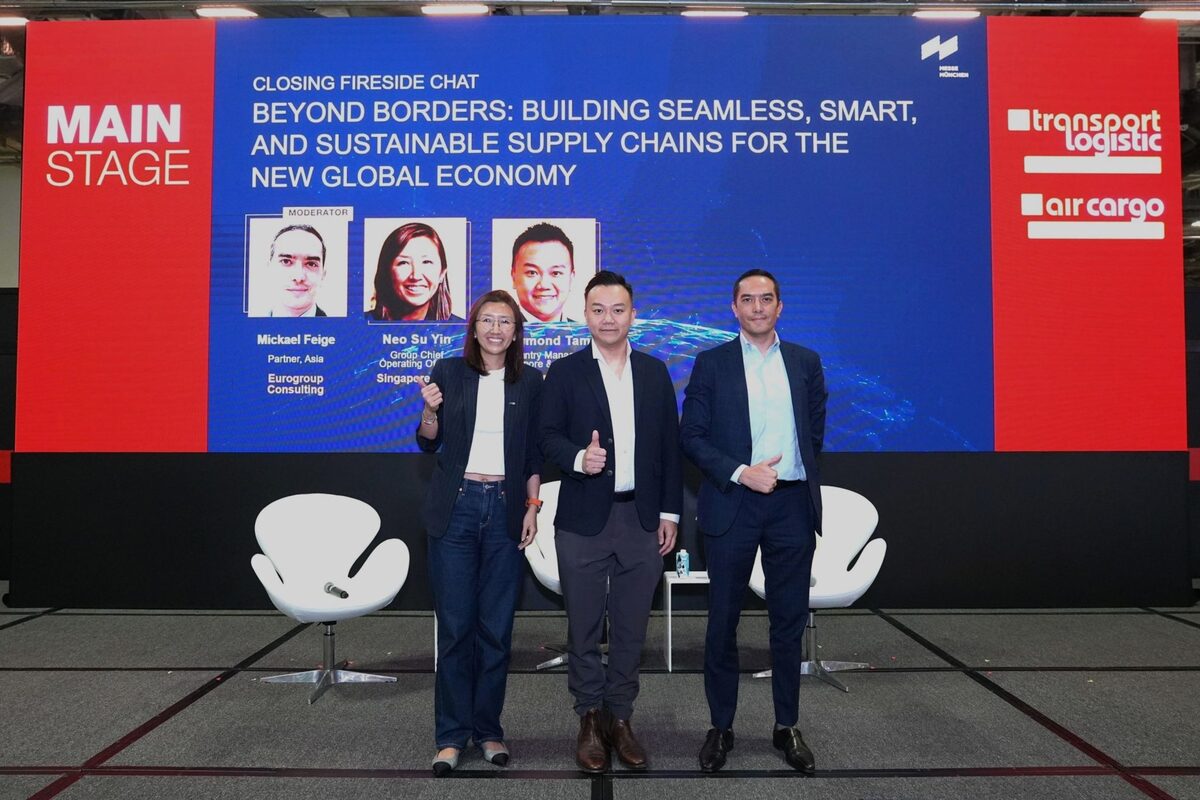
At Transport Logistic Southeast Asia 2025, Mickael Feige, Partner at Eurogroup Consulting, moderated a fireside chat on building seamless, smart and sustainable supply chains for the new global economy.

Damien Duhamel shared his perspective with Business Insider on the factors shaping innovation across Asia's leading cities, from human talent and technology to governance and global integration.

Thailand’s ageing transition is creating a real but selective senior living opportunity. The paper examines investable demand, scalable business models and the constraints still limiting market growth.

Southeast Asia is emerging as a key advanced manufacturing hub. The white paper examines the capabilities, technologies and opportunities reshaping the region’s industrial landscape.

Southeast Asia’s cities are transforming through rapid urbanisation and sustainability. It explores the trends shaping greener, more resilient and inclusive urban development.

ASEAN’s consumer landscape is evolving with rising incomes, digitalisation and changing expectations. The report highlights the trends reshaping how businesses engage and grow across the region.
Regional agribusiness consortium — operations in multiple ASEAN countries
VIEW DETAILHIDE DETAIL →The client faced inefficiencies across their supply chain that were impacting their cost structure and service levels. There was a lack of integration between production, warehousing, and distribution functions. The company needed a strategic plan to enhance supply chain performance across ASEAN markets.
We conducted a thorough analysis of current processes to identify bottlenecks and inefficiencies. Our team implemented a digital tracking system for real-time inventory and shipments monitoring. Additionally, we facilitated cross-functional workshops to foster integrated planning and collaboration among departments.
We recommended adopting a centralized supply chain management system to unify operations across regions. It was advised to invest in automated technologies and staff training to enhance efficiency. A continuous improvement framework was suggested to adapt to evolving market demands and trends.
Supply chain cost reductions of 15% annually were projected, with delivery times improved by 20% within six months. The integration led to better demand forecasting and inventory levels, demonstrating typical improvements in ASEAN agribusiness consulting scenarios.
ASEAN-wide agricultural cooperative — focus on sustainable crops
VIEW DETAILHIDE DETAIL →The cooperative was struggling to meet environmental regulations while maintaining profitability. There was a need for a strategic shift towards sustainable farming practices that complied with ASEAN environmental standards. The client also required guidance on integrating eco-friendly technologies.
We developed a comprehensive sustainability roadmap, tailored to the cooperative's scale and diversity. This included initiatives for soil management, water conservation, and waste reduction. Our approach incorporated precision agriculture techniques and eco-certification processes.
We recommended a phased adoption of agri-tech solutions tailored for sustainable practices. Emphasis was placed on partnerships with local stakeholders to enhance resource sharing. A monitoring framework for sustainability performance metrics was suggested to ensure ongoing compliance.
The strategy projected a 30% decrease in water usage and 25% less waste generated within the first year. Compliance with environmental standards resulted in improved brand reputation, a typical outcome for sustainability consulting projects in ASEAN agriculture.
Emerging agricultural exporter — Southeast Asian markets
VIEW DETAILHIDE DETAIL →The client needed to increase their export capacity to meet rising international demand. Current market penetration strategies were inadequate in addressing competitive pressures from established exporters. Identifying new markets and optimizing export processes were top priorities.
Our team provided comprehensive market research targeting high-demand regions within ASEAN. We customized export strategies to enhance market entry, including leveraging trade agreements. Additionally, supply chain logistics were refined to improve efficiency and reach.
Implementing a market-specific product diversification strategy was recommended to cater to regional tastes. It was advised to utilize digital marketing tools to boost brand visibility and establish direct trade links. Strengthening quality control processes was suggested to ensure compliance with international standards.
An increase in export volume by 35% within a year was projected, with efficient logistics reducing transit times by 20%. These results are typical of an enhanced market entry strategy for crop exports in the ASEAN agricultural sector.
Trusted by clients for long-term collaboration. Selected organizations our teams have supported globally and across ASEAN.























An agricultural market study in ASEAN involves analyzing demand and supply trends, evaluating consumer behavior, and understanding regulatory environments. It also includes competitor analysis, distribution channel assessment, and field interviews with stakeholders to provide a comprehensive view of the market landscape.
A feasibility study is crucial for entering the ASEAN market as it assesses potential challenges and opportunities. It involves evaluating economic conditions, regulatory compliance, logistical considerations, and potential financial outcomes. This ensures informed decision-making and resource allocation for successful market entry.
Market size in the ASEAN agricultural sector is assessed by analyzing production volumes, consumption rates, and import-export data. It includes understanding regional trends, conducting demand forecasting, and examining competitor market shares. This provides insights into growth potential and helps identify strategic opportunities for expansion.
Competitive analysis in ASEAN agriculture involves benchmarking against leading market players, examining their product offerings, pricing strategies, and market positioning. It includes reviewing supply chain efficiency, customer base, and innovation levels. This analysis helps identify strengths and weaknesses relative to competitors.
Risk assessment for ASEAN agricultural projects uses methods like SWOT analysis, scenario planning, and regulatory impact review. It evaluates risks related to climate, market volatility, and policy changes. Understanding these factors helps in developing mitigation strategies and ensuring project resilience and sustainability.
600 N Bridge Rd, #13-06, Singapore 188778