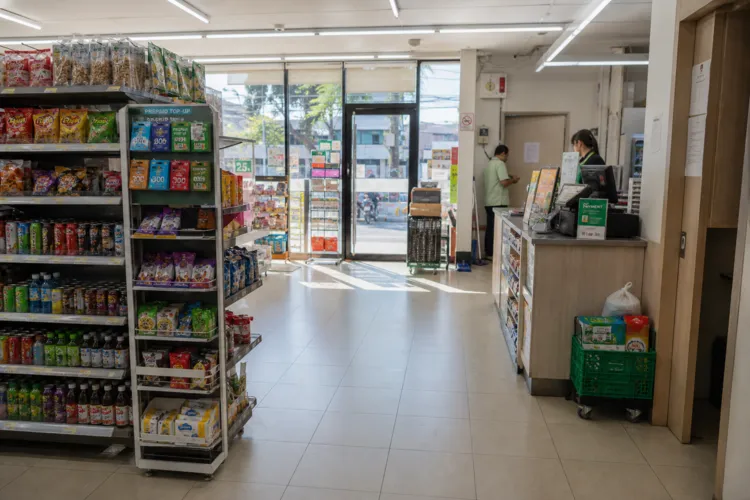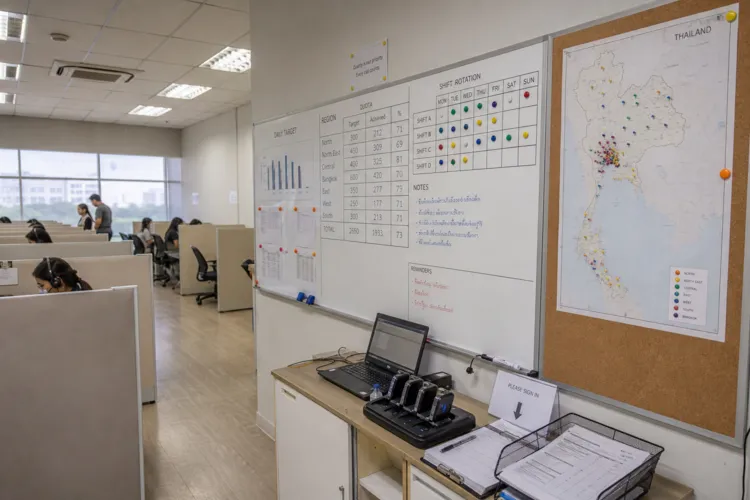

In Thai consumer markets, pricing work often needs a fast way to understand what shoppers feel is acceptable before teams commit to deeper modeling. A Van Westendorp Price Sensitivity Meter (PSM) is a survey-based pricing method that identifies acceptable price ranges by measuring how customers perceive price. It does not try to calculate one “perfect” price. Instead, it shows where prices begin to feel too cheap, too expensive, or questionable in terms of quality. In practice, it is commonly used as the first step in a broader pricing and product research stack, because it turns subjective perceptions into thresholds you can use in planning.
The method is built on four price-perception questions. Respondents give a price that is so expensive they would not purchase (Too Expensive) and a price that is so low they would question quality (Too Cheap). They also provide a price that is starting to get expensive but they would still buy (High Side) and a price they see as a bargain or great value (Good Value). Those answers are plotted as lines on a price sensitivity graph. The intersections define an acceptable range and key thresholds, including the Optimal Price Point (OPP). To keep responses grounded, teams can present context first, confirm awareness or consideration, and use skip logic so only qualified potential customers answer the pricing items.
Study Design Details That Matter in Thailand
How you field the survey can shape the output, especially in categories where promotions, fees, or taxes change the “price paid.” In highly promotional markets, PSM should use an all-in pocket price context (including fees and taxes) so the results do not mislead. A focused PSM study can be fielded and analyzed in 2–3 weeks, covering questionnaire setup, sampling, QA, and curve creation. For most business-to-consumer work, a recommended minimum sample size is 200–400 respondents per market segment. Precise phrasing also matters. One example noted that slightly different question wording led a consumer electronics client to reach wildly different conclusions than a properly framed analysis.
For teams running a Van Westendorp pricing study in Thailand, it helps to clarify what the output will and will not do. The PSM is fast and low-cost and is ideal for early-stage scoping, such as a new product launch or repositioning where you need a directional corridor before deeper analytics. It is not a substitute for profit optimization or feature-price trade-off analysis. If the goal is to explicitly model purchase intent, trade-offs, or demand response at specific price points, methods such as Gabor-Granger or Conjoint analysis are more appropriate. Used in sequence, PSM can frame the initial range and the other methods can test demand and trade-offs in more detail.
Once you have the acceptable price range, the next step is validation in-market. A practical approach is to A/B test 2–3 price points within the range and observe conversion, ARPU or ASP, and margin, then refine list prices and discount guardrails before a broader rollout. Guidance also suggests refreshing PSM work annually in stable markets, with quarterly updates potentially needed in volatile periods or during significant economic change. One provider reports that an enhanced PSM showed 82–87% accuracy in predicting optimal price points in its validation studies, compared with 61% for cost-plus methods and 58% for competitive benchmarking. These figures are not specific to Thailand, but they illustrate why many teams treat PSM as a strong early indicator when combined with disciplined execution.
What does the Van Westendorp Price Sensitivity Meter measure?
What are the four Van Westendorp pricing questions?
How long can a focused PSM project take to run and analyze?
What sample size is recommended for B2C segments?
How should a Van Westendorp pricing study be applied in Thailand’s consumer markets?