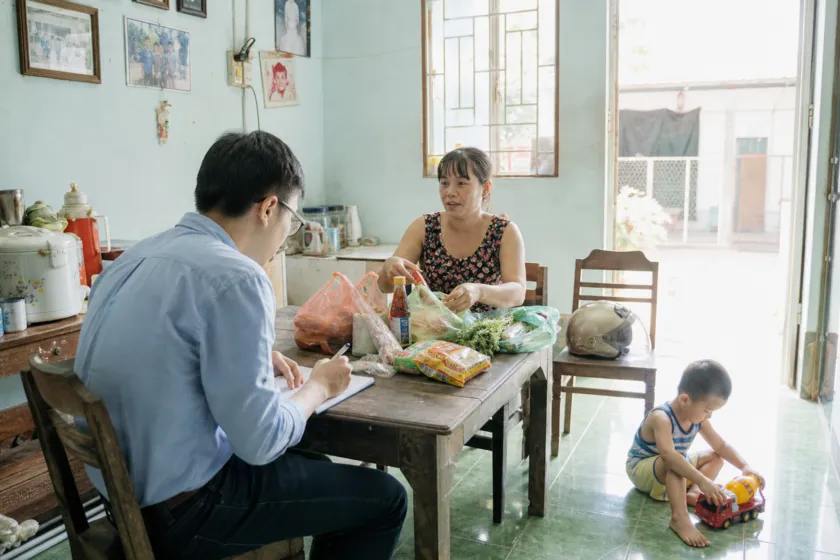
Vietnam’s retail market momentum makes “what people do at home” more important, not less. In 2025, Vietnam’s retail market reached an estimated $269 billion, and total retail sales of goods and consumer service revenue rose by 9-10% year-on-year, described as the fastest growth in the past five years (excluding the period disrupted by the pandemic). At the same time, analysts note the market is becoming more sophisticated, with e-commerce, traditional retail, shopping centers, and home delivery developing in parallel. That mix can mask how households actually decide, substitute, and compromise. In Tier-2 and Tier-3 cities, those decisions often happen in kitchens, living rooms, and family courtyards—places that are easiest to understand through in-home observation.
Another reason in-home work keeps winning is that “recovery” does not mean “certainty.” CBRE’s Asia Pacific Retail Trends Q1 2026 notes consumer confidence improved in the first two months of 2026, with shoppers moving from strict cost-cutting to more selective spending. But the same report flags that rising inflation and higher oil prices are expected to weigh on the outlook in the coming months, keeping overall sentiment cautious. When households are cautious, what they say in a quick survey can diverge from what they do in private. In-home research helps teams see the real substitution logic, the actual products kept within reach, and the hidden constraints that shape brand choice—especially outside Vietnam’s biggest city centers.
Why “Human Signals” Still Beat Perfect-Looking Data
Technology can accelerate market research, but it does not automatically capture meaning. Marketing Week argues that the most valuable insights often come from face-to-face conversations with real people, and gives an example from Shell: truck drivers in the Middle East assessed engine oil quality by rubbing thumb and middle finger together rather than saying “viscosity.” A physical gesture like that may not show up in transcripts or dashboards, even if it drives the message that lands. The same logic applies to Vietnam’s smaller cities, where a glance at a pantry shelf, a family member’s influence, or a habitual preparation step can explain “why” better than any abstract attribute list. This is where consumer ethnography Vietnam programs remain hard to replace.
None of this means companies should ignore AI or synthetic data. Marketing Week notes that AI can remove “drudge work,” speeding mass data analysis, and that AI-generated “synthetic” profiles can help test hypotheses and fast-fail before investing in real research. Separately, one industry write-up values the global marketing research sector at approximately $90 billion and frames the persistent challenge as costly, time-consuming data procurement. But in Vietnam’s Tier-2 and Tier-3 contexts, these tools work best as a pre-step, not the finish line. In-home observation is what validates whether a “clean” hypothesis survives contact with daily life, including shopping routes, storage realities, and family routines.
Finally, retail itself is changing in ways that make “home context” more decisive. CBRE notes limited CBD supply is pushing brands toward standalone, high-traffic locations and, in some cases, non-CBD districts for availability and flexibility. Savills analysts also describe Vietnam’s retail market shifting toward higher-quality models that emphasize experience and cater to more sophisticated urban needs, while e-commerce and delivery continue to develop alongside physical formats. For Tier-2 and Tier-3 cities, that fragmented path-to-purchase can look different household by household. In-home ethnography connects the dots between where people buy, how they use products, and what “experience” means in everyday routines—insight that can guide assortment, messaging, and format choices without overgeneralizing from big-city patterns.
Why does in-home ethnography matter more as Vietnam’s retail market grows?
What does early 2026 consumer sentiment suggest for research in smaller Vietnamese cities?
How does face-to-face work capture insights that data summaries can miss?
Where can AI and synthetic data fit alongside in-home ethnography?
How should teams frame consumer ethnography in Vietnam for Tier-2 and Tier-3 cities?