Planning qualitative research in Vietnam starts with a realistic view of the environment your participants live in. Vietnam’s economy has maintained strong momentum in Q1 2026, with GDP growth reaching 7.83%, according to commentary cited by Vietnamnet. Over the same period, total registered FDI capital was estimated at around USD 15.2 billion, up 42.9% year-on-year, while disbursed capital reached USD 5.41 billion, described as the highest Q1 level in the past five years. For qualitative teams, this kind of rapid movement can change jobs, income expectations, and brand exposure between recruitment and fieldwork. Build screeners that capture “newly changed” behaviors, and ask time-anchored questions (for example, “in the last month”) to avoid mixing past and present realities.
Moderator choice matters because the categories shaping daily life are not uniform. Harvard’s S&P research, summarized by VnExpress, notes that while growth has been driven by manufacturing, Vietnam’s stock market remains heavily weighted toward domestically focused sectors, with real estate and financials accounting for more than 60% of total market capitalization. That context can surface in interviews as practical concerns about housing, credit, and stability. Moderators should therefore probe trade-offs and constraints, not just preferences. Use neutral language around money and “status” topics, and design prompts that let people speak in ranges and scenarios. When exploring modern consumption, remember Vietnam is also seeing strong tourism growth, with 21.2 million foreign visitors in 2025 and a target of 25 million this year, according to VnExpress. These flows can influence perceptions in cities and tourist hubs, so set quotas by location and exposure.
Moderator and Translation Tips for Vietnamese-Language Sessions
Vietnamese-language nuance is not a “nice to have” in fieldwork. A case study in The Drum frames Vietnamese as “not just a language” but a “tapestry of heritage and connection,” and it describes Samsung as Vietnam’s smartphone market leader with 26% share in H2 2025. Treat that as a reminder that tech products, interfaces, and everyday speech can carry cultural meaning. In practice, brief moderators and translators together, not separately. Align on terms that should stay in English (brand features, UI labels) versus terms that need natural Vietnamese equivalents. In live sessions, use a two-step method: first translate literally, then rephrase for intent. If you are using AI tools to accelerate workflows, keep expectations grounded. HBR notes that generative AI promises to improve a process that is typically “hard, slow, and costly,” but your team still needs human judgment to preserve intent and avoid flattening culturally loaded phrases.
Translation quality controls should reflect how Vietnam is positioned in high-tech exports and investment. VnExpress reports machinery and electronics dominate exports and drove a 4.2% compound annual growth rate in total export growth between 2014 and 2024. Vietnamnet also reports the manufacturing and processing sector accounted for more than 70% of total registered FDI capital in Q1 2026. In fast-moving, tech-adjacent categories, mistranslating feature language or benefit claims can distort insight. Use back-translation for key stimuli, but do not rely on it alone. Add “concept checks” in Vietnamese where the moderator asks participants to explain an idea in their own words, then the interpreter summarizes it for observers. Finally, ensure transcripts tag code-switching and loanwords, because these can signal sophistication, aspiration, or simply habit in specific groups.
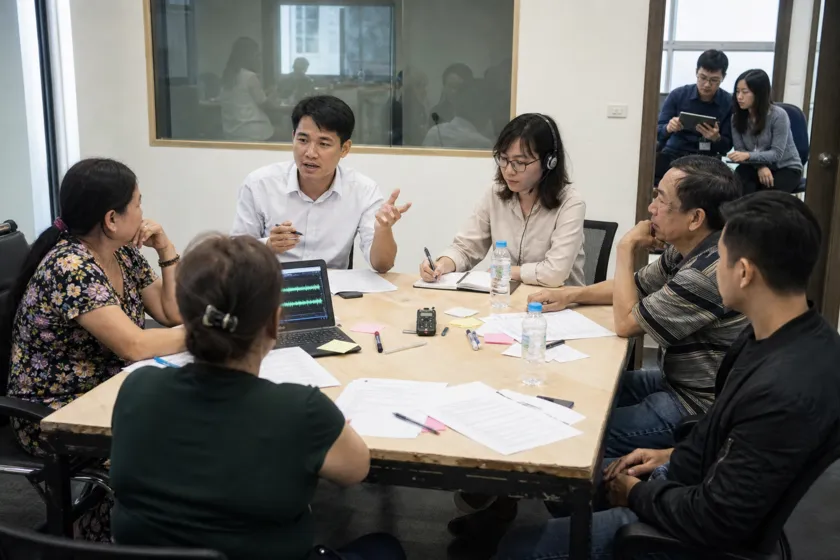
Operationally, structure your sessions so observers can follow meaning, not just words. If you are running bilingual backroom setups, agree on a single glossary before fieldwork, and update it nightly as new phrases emerge. Use short, concrete probes when participants discuss complex macro themes, such as trade or jobs. For example, Vietnamnet reports Vietnam’s exports to the US reached more than USD 151.8 billion in 2025, and the first two months of 2026 recorded USD 23.84 billion, up 21.9% year-on-year. These are big-picture signals, but in qual you should connect them to lived experience: “Have you seen changes in your work schedule, overtime, or hiring?” VnExpress also notes new orders increased for a sixth straight month, at the quickest rate since October 2025, and some firms reported hiring additional staff on a temporary basis. Those details can guide sharper moderator probes and cleaner translation notes.
How should I brief a moderator for qualitative research in Vietnam?
What figures can help explain why fast context checks matter in Vietnam fieldwork?
How do I reduce translation risk in Vietnamese-language interviews?
When should I use back-translation versus live concept checks?
Can AI replace human translators or moderators in qualitative work?