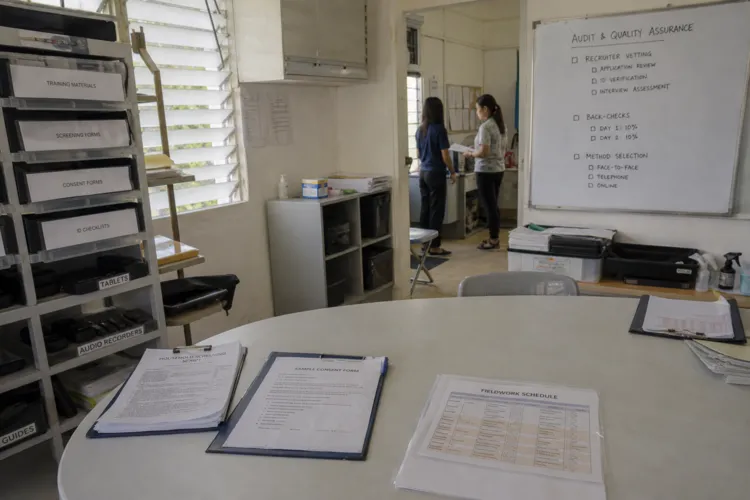

Southeast Asia is diverse by language, culture, and regulation, so your agency choice should start with country-by-country fit. Luth Research frames the region as a “vibrant hub” for market research and highlights the need to navigate diverse consumer profiles, high internet and smartphone penetration, and varying regulations across countries. In practice, that means you should ask agencies how they handle local nuance, what data collection approaches they rely on in digitally connected markets, and how they manage compliance when studies span multiple countries. Build your shortlist around partners that can explain their approach clearly, not just their brand name.
Next, validate that the agency can execute the method that matches your business decision. In Singapore, Assembled notes that focus groups help explain “why,” surveys help quantify “how many,” and ethnographies reveal what people do versus what they say. Their guide describes focus groups as small discussions of six to eight participants, commonly run as four to six sessions across segments, with sessions lasting 90 to 120 minutes. It also describes in-depth interviews as one-on-one sessions lasting 45 to 90 minutes, useful for sensitive topics or hard-to-recruit audiences like physicians or C-suite executives. Use these benchmarks to sanity-check proposed sample structures, timelines, and whether the plan fits your question.
Buyer’s Checklist: What to Ask Before You Sign
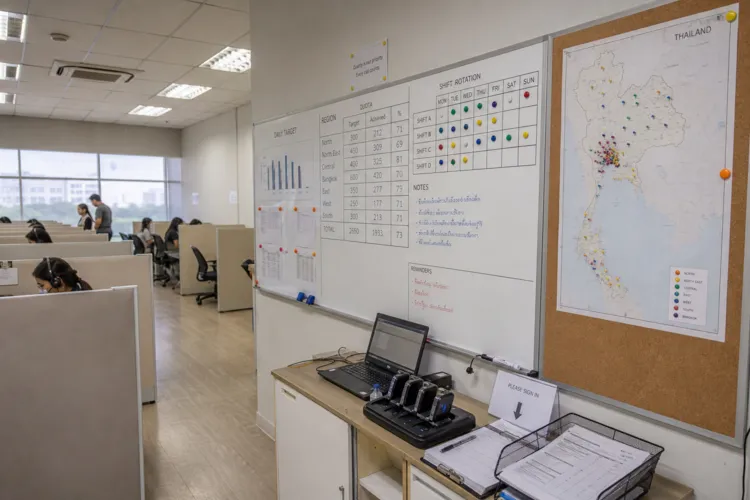
When choosing market research agency Southeast Asia buyers can compare, ask for proof of local execution and fieldwork readiness. For Singapore work, Assembled states bilingual moderation in English and Mandarin is standard, and that Malay, Hokkien, and Cantonese capability can be necessary for certain demographics, including older consumers, heartland audiences, and Malay-Muslim segments. That is a concrete checklist item: confirm who moderates, in which languages, and for which segments. Also ask how they recruit and what infrastructure they control. Assembled describes a 100,000-member proprietary panel and says it has completed 600+ projects across Southeast Asia since 2016. Those are the types of specific operational claims you can compare across bids.
Then compare agencies on tools and delivery model, because Southeast Asia projects often require speed and cross-platform thinking. Luth Research positions itself around advanced tracking technology and says it uses ZQ Intelligence™ for cross-platform tracking across devices. Standard Insights positions itself as an “all-in-one consumer research platform” that lets teams collect, analyze, and report data, and it promises “guaranteed on-time delivery.” These statements point to a practical question: do you need a full-service team to scope, moderate, and synthesize, or a platform-led workflow where your team runs surveys and reporting directly? Ask where the agency adds human judgment versus automation, and what you will receive at the end.
Finally, ensure regional coverage and credibility match your expansion plan. Luth Research lists major global firms with Southeast Asia presence, including Nielsen, Kantar, and Ipsos, each described as offering strengths such as audience measurement and analytics, brand health tracking, advertising effectiveness, and customized solutions. If you are entering Vietnam or operating across multiple SEA markets, InCorp’s Vietnam list notes that Milieu Insight operates in Singapore, Malaysia, Thailand, Indonesia, Philippines, and Vietnam, and that it has received Campaign Asia’s Market Research Agency of the Year (Gold) and Tech MVP awards. Kadence International describes Singapore as a regional hub from which it conducts work within Southeast Asia and across Asia and Australia, and also offers fieldwork partner support for access to respondents across Asia. Put simply: pick the partner whose footprint, methods, and delivery approach align to the specific markets you must win.
What should I prioritize when choosing a market research agency in Southeast Asia?
What are typical focus group parameters mentioned for Singapore research?
When are in-depth interviews a better choice than focus groups?
Which firms are cited as top market research firms in Southeast Asia?
What evidence of capacity can an agency provide beyond a pitch deck?