

Indonesia’s Personal Data Protection (PDP) Law changes how research teams should think about consumer data as an operational asset. The big implication is less about “more data” and more about permission, purpose, and accountability across the entire collection chain. In day-to-day market research, that affects how surveys are designed, how participant lists are built, and how datasets are shared with agencies, panel partners, and analytics vendors. The PDP Law impact on market research Indonesia teams will often be felt first in process: tighter documentation, clearer participant notices, and stricter internal approvals before consumer data moves between systems.
One practical reason this matters is the broader shift toward privacy as a performance driver, not just a compliance task. A global marketing snapshot shows that 77% of global CMOs say “privacy is the new performance.” That mindset aligns with research realities: a project that earns trust can improve participation and reduce drop-off, while weak privacy practices can undermine data quality and stakeholder confidence. Even when research is not marketing, it touches the same consumer expectations. The operational takeaway is to treat consent language, opt-in flows, and privacy notices as part of research quality control, not as boilerplate.
Where Data Collection Is Heading: More First-Party, More Friction
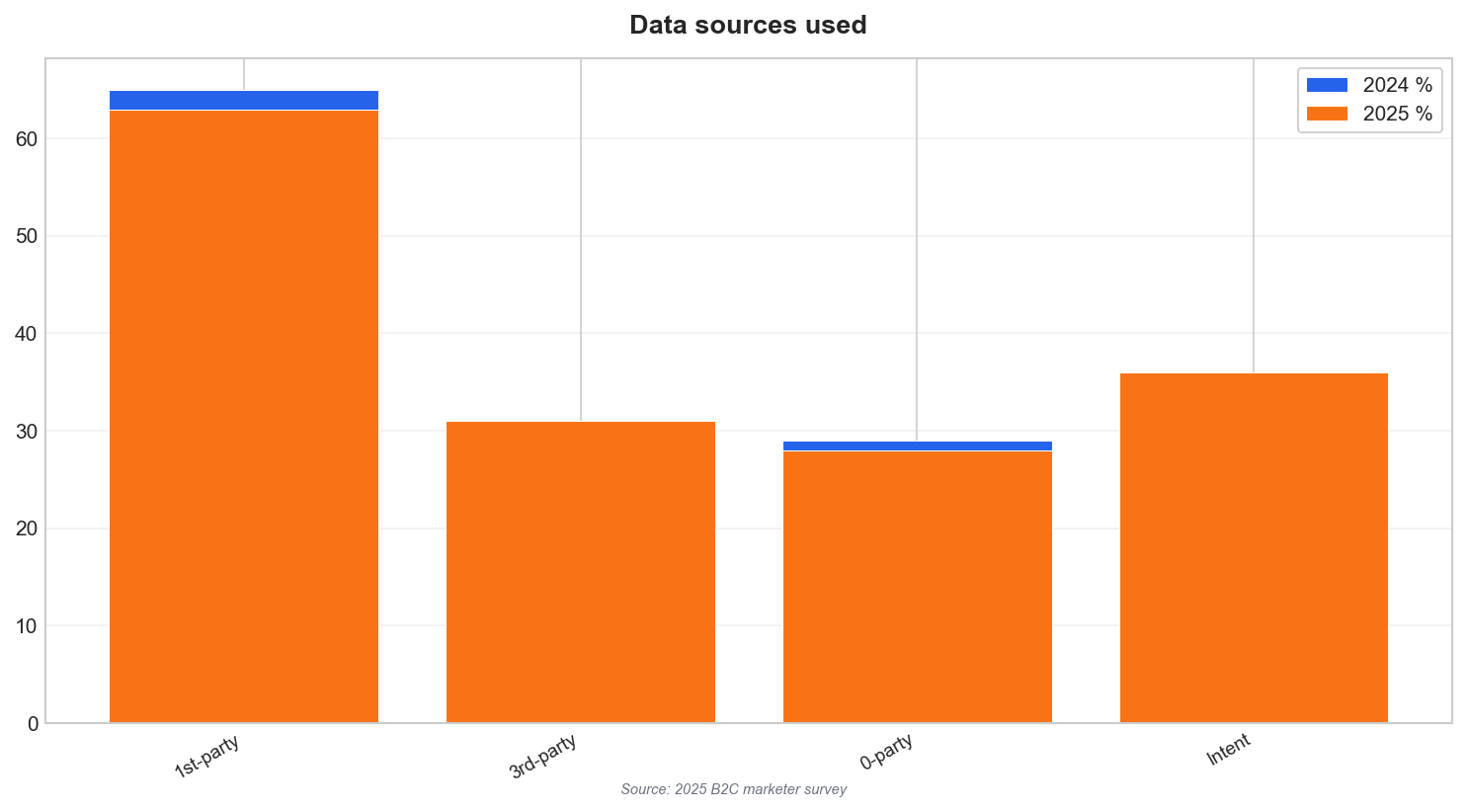
Market research teams also need to plan for messy data ecosystems. In a 2025 view of B2C marketers’ data usage, 63% reported using first-party data (down from 65% in 2024), while third-party data usage rose to 31% (from 25%). The same view shows 28% using zero-party data, down one point year over year, and intent data reliance rising from 29% to 36%. These are not Indonesia-specific results, but they illustrate the exact tension PDP-era research must manage: stronger consent expectations alongside pressure to unify data from surveys, CRM, websites, and third parties. That makes governance and traceability more important than ever.
For teams operating in Indonesia’s increasingly digital economy, this governance question becomes more urgent because data flows are expanding. One overview describes Indonesia’s GDP at approximately $1.5 trillion and notes a country of over 200 million people, with GDP per capita around $5,500. It also describes QRIS supporting tens of millions of merchants and processing billions of transactions annually. Those figures are not “market research metrics,” but they explain the environment researchers work inside: more digital touchpoints, more transaction trails, and more opportunities to infer consumer behavior. Under the PDP Law, research plans should anticipate stricter scrutiny over what is collected, what is necessary, and how it is secured across tools and vendors.
Finally, it helps to look at how other privacy regimes frame similar issues. In the United States, a CFPB notice around a “Personal Financial Data Rights” rule discusses informed consent for third-party access, limits on data use to the product requested by the consumer, and questions about information security responsibilities and breach remediation costs. Indonesia’s PDP Law is a different framework, but the themes are familiar: define who can access data, restrict secondary uses, and be explicit about security roles when third parties handle personal data. For market research leaders, the safest path is to design studies and vendor contracts so purpose limits, consent capture, and security accountability are clear enough to defend later.
How does Indonesia’s PDP Law change market research and consumer data collection?
Why does consent matter more now for research projects?
What data sourcing trends should research teams plan around?
How do third-party partners raise risk in data collection programs?
What makes Indonesia’s data environment especially complex for researchers?