Designing an effective B2B market research Indonesia study begins with scoping decisions to a real business question. Indonesia’s business landscape is complex, and research is used to identify preferences, understand regional differences, and stay ahead of trends. It also supports competitive analysis and risk mitigation when companies face issues like regulatory changes or logistics challenges. A practical way to keep the study useful is to define the decision it must support, the stakeholders who will use it, and the minimum evidence needed to act. That discipline prevents data collection from becoming a reporting exercise instead of a decision tool.
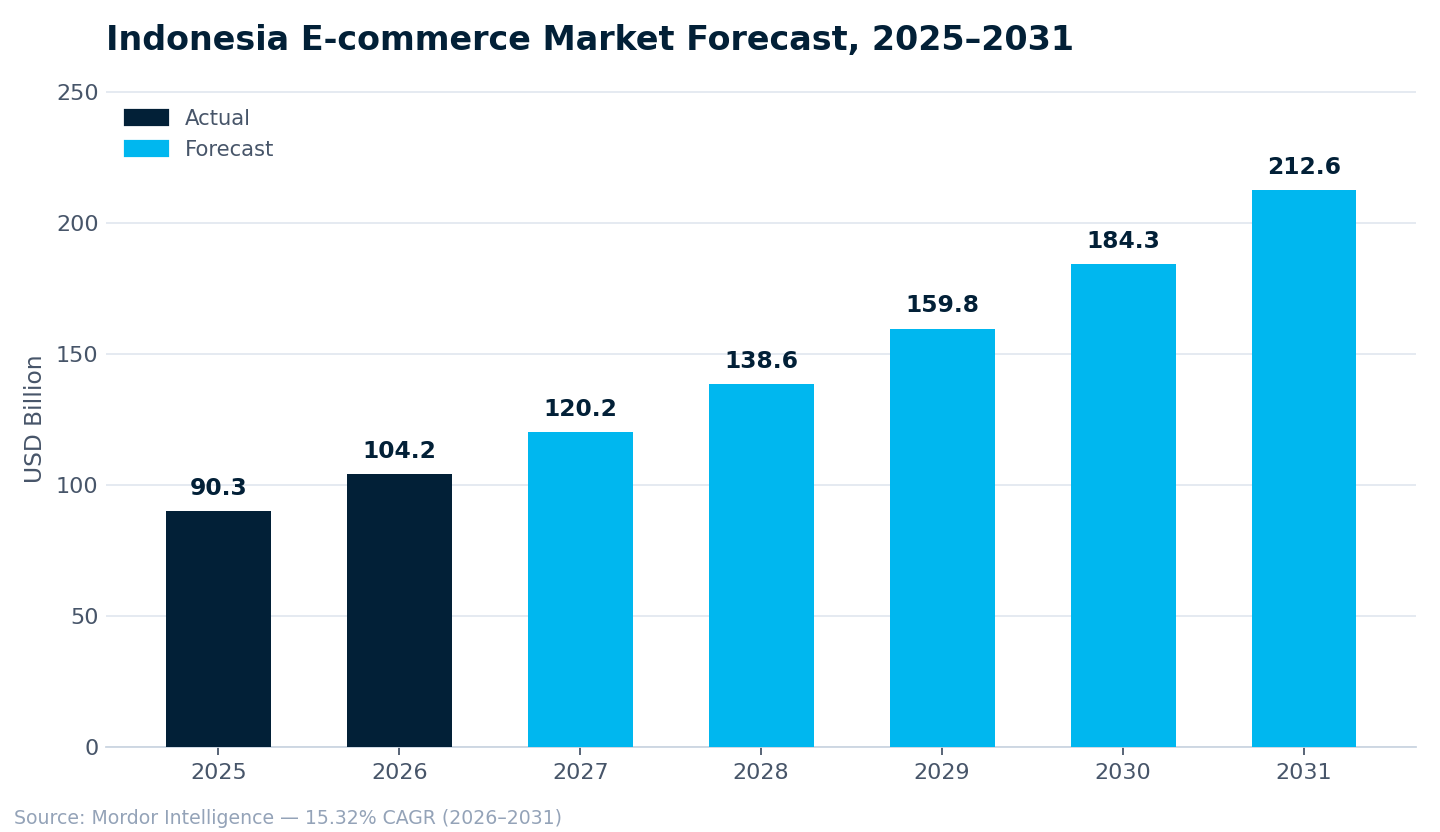
Next, anchor the study in market realities that shape how B2B buyers operate. In Indonesia’s e-commerce market, Mordor Intelligence expects growth from USD 90.35 billion in 2025 to USD 104.21 billion in 2026, reaching USD 212.58 billion by 2031, with a 15.32% CAGR over 2026–2031. Within that market, B2C held 86.90% share in 2025, while the B2B segment is projected to expand at an 18.74% CAGR to 2031. These dynamics can inform hypotheses about procurement digitization, channel conflict, and platform expectations. Device and payment behavior matters too, because smartphones captured 69.40% of market size in 2025, and digital wallets led with 40.60% revenue share in 2025.
Sampling and Fieldwork Design for Indonesia’s Real-World Diversity
Sampling is where many Indonesia studies lose validity, especially when they lean too heavily on urban online panels. Iconic Research notes that online panels skew toward Java and urban demographics, and designs built on urban online panels produce findings that represent approximately 30% of the actual consumer base. Even in B2B work, this is a warning about over-representing Jakarta-centric networks. For coverage, a nationally representative sample requires deliberate geographic stratification, with Java, Sumatra, and other islands at minimum. Also account for language and group dynamics. Bahasa Indonesia is national, but regional dialects can affect instruments, and focus groups run in Jakarta with nationally mixed samples may suppress regional candour.
Method selection should match what you need to learn, not what is easiest to run. The PT Kazee Digital Indonesia case study used a mixed method approach: in-depth interviews and internal FGDs to explore motivations, risks, and decision criteria, then an Analytical Hierarchy Process (AHP) model with paired comparison questionnaires completed by ten internal participants from various divisions. That sequence is useful for many B2B studies because it turns qualitative discovery into structured prioritization. In Indonesia, where social desirability bias can appear in formal settings, Iconic Research recommends designs that incorporate projective techniques, ethnographic observation, and in-home placement studies to observe behaviour rather than relying only on stated answers.
Finally, plan analysis and outputs so the research translates into action. SIS International emphasizes data cleaning to remove inaccuracies, duplicates, or incomplete entries, and using statistical techniques to identify patterns, correlations, and trends. Keep segmentation aligned to how sectors actually buy. In the Indonesia B2B telecom market, Mordor Intelligence values the market at USD 1.88 billion in 2025 and estimates growth from USD 1.91 billion in 2026 to USD 2.05 billion by 2031, at a 1.43% CAGR during 2026–2031. Mobile connectivity led with 57.40% revenue share in 2025, and data and internet services accounted for 53.20% in 2025. These figures can guide questionnaire modules and reporting cuts by connectivity type, service category, enterprise size, and vertical.
How do you design B2B market research in Indonesia that stays representative?
Which Indonesia figures can help frame B2B channel and digitalization hypotheses?
What mixed-method structure worked in the PT Kazee Digital Indonesia study?
How should researchers handle social desirability bias in Indonesia studies?
What B2B telecom benchmarks can inform segmentation and reporting in Indonesia?